• The Impact of Formation Conditions on Battery Performance

    In the manufacturing process of lithium-ion batteries, formation is a critical procedure. This article discusses the impact of formation conditions (e.g., formation current, formation voltage, formation temperature, and external pressure) on battery performance, including internal resistance, capacity, and cycle life. TOB NEW ENERGY provides battery formation machine of various specifications to meet the production needs of battery laboratory research and battery production lines.

    Formation refers to the initial charging process after electrolyte injection and rest, during which the solid electrolyte interphase (SEI) layer is formed. Variations in formation protocols result in slightly different SEI layers. The morphology of the SEI layer directly affects cell performance, such as rate capability, high-voltage stability, and particularly cycle life.

    Below is a detailed analysis of how formation conditions influence cell performance:


    1. Formation Current

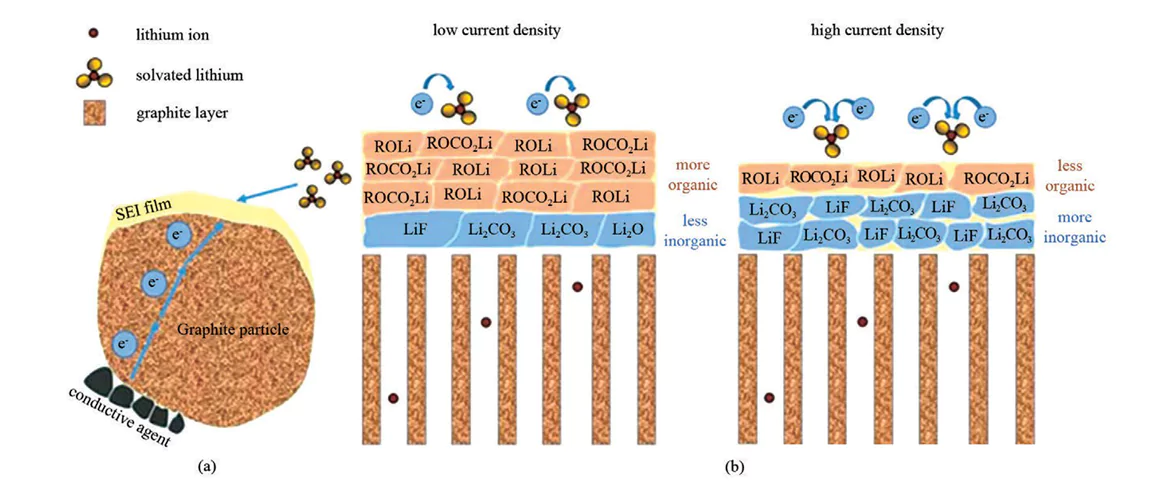
    Studies show that lower current densities facilitate the formation of a robust SEI layer. The SEI formation involves two stages: nucleation and growth. High current densities accelerate nucleation, leading to a porous SEI structure with poor adhesion to the anode surface. Conversely, low current densities slow nucleation, producing a denser SEI layer. However, a porous SEI can better infiltrate the electrolyte, resulting in higher ionic conductivity compared to SEI formed under low current densities.

    Traditional low-current pre-charging methods help form a stable and dense SEI, but prolonged low-current charging increases SEI impedance, negatively impacting rate capability and cycle life. Additionally, low-current formation prolongs production time, reducing manufacturing efficiency. To address this, a stepwise current formation protocol during the constant-current (CC) phase has been proposed. This approach reduces polarization, improves charge capacity, shortens formation time, and enhances efficiency.

    battery formation

    Figure 1(a) SEI formation on graphite surfaces during formation and (b) the effect of formation current density on SEI structure.


    2. Formation Voltage

    Different formation voltages significantly affect electrode surface conditions, internal resistance, and cycle performance. For example, a study comparing cutoff voltages of 3.5 V and 4.2 V found that a 4.2 V cutoff yielded higher charge capacity but 4.1% lower charge-discharge efficiency than 3.5 V. Batteries formed at 4.2 V exhibited higher electrode resistance and faster cycle degradation.

    3. State of Charge (SOC)

    SOC is a critical parameter in formation optimization. Coupled with charge/discharge voltage, varying SOC levels during aging induce different degrees of reactivity, altering SEI properties and ultimately battery performance. Experimental results indicate that 25% SOC leads to higher impedance and lower capacity retention before and after aging. The optimal protocol involves charging to 100% SOC, discharging to 25% SOC (i.e., maintaining 75% SOC), followed by aging at room temperature. This method achieves the highest initial discharge capacity and capacity retention.


    4. Formation Temperature

    For polymer lithium-ion batteries, high-temperature formation promotes more complete SEI formation and enhances separator wettability, reducing gas generation. However, low-temperature formation favors slower lithium salt reduction, enabling ordered and dense SEI deposition, which extends cycle life. While high-temperature SEI layers exhibit higher ionic conductivity, their instability due to accelerated dissolution and solvent co-intercalation worsens cycle performance. Most manufacturers adopt high-temperature aging (30–60°C) to improve cycle and storage performance.


    5. External Pressure

    Gas generation during formation increases the distance between electrodes, lengthening Li-ion transport paths and raising impedance, thereby reducing capacity. Applying moderate pressure eliminates gas, ensures tight electrode contact, minimizes deformation, and improves formation capacity, rate capability, and cycle life. Post-mortem analysis reveals that insufficient pressure causes lithium plating on the anode, while optimal pressure prevents such defects.


    Summary:

    The formation process plays a decisive role in lithium-ion battery performance. Optimizing formation current, voltage, temperature, and external pressure is crucial for enhancing battery properties. However, individual parameter adjustments yield limited improvements. A holistic optimization strategy is essential to maximize battery performance.

  • The Role of Ni, Co, Mn, and Al in Li-ion Battery Ternary Cathode Materials

    Lithium-ion batteries (LIBs) are the powerhouse of modern electronics and electric vehicles (EVs), and their performance hinges on the cathode materials. Among these, ternary cathode materials such as NCM (Nickel-Cobalt-Manganese oxides) and NCA (Nickel-Cobalt-Aluminum oxides) dominate due to their balanced energy density and stability. However, varying the ratios of nickel (Ni), cobalt (Co), manganese (Mn), or aluminum (Al) profoundly impacts their electrochemical behavior. Let’s dissect the roles of each element and how their proportions influence battery performance.


    1. Nickel (Ni): The Energy Density Booster

    Key Functions

    • High Capacity: Nickel is the primary contributor to capacity. It undergoes redox reactions (Ni²⁺ ↔Ni³⁺ ↔Ni⁴⁺) during charge/discharge, enabling the extraction and insertion of lithium ions. Higher nickel content increases the material’s specific capacity (e.g., NCM811 delivers ~200 mAh/g vs. NCM111’s ~160 mAh/g).
    • Voltage Profile: Nickel-rich cathodes exhibit a higher average discharge voltage (~3.8 V), directly boosting energy density.
    • Structural Challenges:
      • Phase Transitions: At high nickel levels (>80%), layered structures (e.g., α-NaFeO₂-type) tend to transform into disordered spinel or rock-salt phases during cycling, causing irreversible capacity loss.
      • Cation Mixing: Ni²⁺ions (ionic radius ~0.69Å) may migrate into Li⁺sites (0.76Å), blocking lithium diffusion pathways and accelerating degradation.

    Impact of Nickel Content

    • High-Ni Cathodes (e.g., NCM811, NCA):
      • Pros: Energy density up to 300 Wh/kg, ideal for EVs requiring long driving ranges.
      • Cons: Poor thermal stability (thermal runaway starts at ~200°C), shorter cycle life (~1,000 cycles at 80% capacity retention).
    • Mitigation Strategies: Surface coatings (e.g., Al₂O₃, LiPO₄), doping with Mg/Ti to stabilize the structure.


    2. Cobalt (Co): The Structural Stabilizer

    Key Functions

    • Structural Integrity: Co³⁺suppresses cation mixing by maintaining strong Co-O bonds, preserving the layered structure.
    • Electronic Conductivity: Co enhances electron transport, reducing internal resistance and improving rate capability.
    • Ethical and Economic Issues: Cobalt is expensive (~$50,000/ton) and linked to unethical mining practices in the Democratic Republic of Congo (DRC), driving efforts to eliminate it.

    Impact of Cobalt Content

    • High-Co Cathodes (e.g., NCM523):
      • Pros: Excellent cycle life (>2,000 cycles), stable voltage output.
      • Cons: High cost, limited sustainability.
    • Low-Co/Co-Free Alternatives:
      • Manganese Substitution: Mn or Al replaces Co in NCMA (Ni-Co-Mn-Al) cathodes.
      • LiNiO₂-Based Materials: Pure nickel cathodes are being explored but face severe structural instability.


    3. Manganese (Mn) and Aluminum (Al): Stability Enhancers

    Manganese in NCM

    • Thermal Stability: Mn⁴⁺forms strong Mn-O bonds, delaying oxygen release at high temperatures (>250°C for NCM vs. <200°C for high-Ni systems).
    • Cost Reduction: Manganese is abundant and cheap (~$2,000/ton), lowering material costs.
    • Drawbacks: Excess Mn (>30%) promotes spinel phase formation (e.g., LiMn₂O₄), reducing capacity and voltage.

    Aluminum in NCA

    • Structural Reinforcement: Al³⁺(ionic radius ~0.54Å) occupies transition metal sites, minimizing cation mixing and improving cycle life.
    • Safety Boost: Al-O bonds are highly stable, reducing oxygen evolution during thermal abuse.
    • Trade-offs: High Al content (>5%) degrades electronic conductivity, requiring nanosizing or carbon additives.


    4. Balancing the Elements: Popular Compositions and Trade-offs

    Material

    Ratio (Ni:Co:Mn /Al)

    Energy Density

    Cycle Life

    Thermal Stability

    Cost

    Applications

    NCM111

    1:1:1

    Moderate

    High

    Excellent

    Medium

    Power tools, low-cost EVs

    NCM523

    5:2:3

    Moderate-High

    High

    Good

    High

    Mid-range EVs, laptops

    NCM811

    8:1:1

    Very High

    Low

    Poor

    Low

    Premium EVs (Tesla, NIO)

    NCA

    8:1.5:0.5 (Ni:Co:Al )

    Very High

    Moderate

    Moderate

    High

    Tesla Model S/X


    5. Future Trends and Innovations

    High-Ni, Low-Co Systems

    • Goal: Achieve >350 Wh/kg energy density while minimizing cobalt (e.g., NCM9½½, NCMA).
    • Challenges: Managing Ni-induced degradation via atomic-layer deposition (ALD) coatings or gradient structures (core-shell designs).

    Solid-State Batteries

    • Ternary materials paired with solid electrolytes (e.g., Li₇La₃Zr₂O₁₂) could suppress dendrites and enhance safety.

    Sustainability Initiatives

    • Recycling: Recovering Ni/Co from spent batteries (e.g., hydrometallurgy) to reduce reliance on mining.
    • Cobalt-Free Cathodes: Mn-rich LNMO or LiFePO₄for cost-sensitive applications.

    Conclusion

    The chemistry of ternary cathode materials is a delicate dance between energy density, longevity, safety, and cost. Nickel drives capacity but destabilizes the structure, cobalt anchors stability at a high price, while manganese and aluminum offer affordable reinforcement. As the industry marches toward Ni-rich, Co-low systems, breakthroughs in material engineering and recycling will be key to powering the next generation of EVs and renewable energy storage.

    Learn More About NCM Cathode Materials and NCA Cathode Materials for Lithium ion Battery Research and Manufacturing

  • Analysis of insulation of ammonia pipeline using electric heating system

    As an important chemical raw material and refrigerant, the stability of ammonia pipeline transportation system is directly related to production safety and efficiency. In low temperature environment, ammonia is easy to liquefy, water in the pipeline freezes or forms ammonia corrosion, which may lead to blockage, leakage and other risks. With its precise temperature control, explosion-proof and corrosion-resistant characteristics, the electric heating system has become a more suitable solution for antifreeze insulation of ammonia pipelines.

    Self Regulating Heating Cable


    Why does ammonia pipeline need electric heating system insulation?
    Prevent liquid ammonia condensation and ice blockage: The boiling point of ammonia at standard atmospheric pressure is -33.34°C. When the pipeline temperature is lower than this value, gaseous ammonia will liquefy into liquid ammonia, causing flow meter failure and valve blockage. Electric heating maintains the pipeline temperature above 0°C to ensure that ammonia is transported stably in gaseous form.
    Inhibit ammonia corrosion and freezing: If there is water in the pipeline, it will react with ammonia to form ammonia water at low temperature, and the freezing point will rise. However, ammonia water is highly corrosive and will accelerate the corrosion of pipelines and welds. Electric heating eliminates condensed water through temperature control and slows down the corrosion process.
    Ensure the stability of the emergency system: When ammonia leaks, the sprinkler system needs to start quickly to dilute the concentration. If the fire water pipe freezes, it will delay the disposal and may cause an accident. Electric heating ensures that firefighting and pressure relief facilities are available at any time.
    Adapt to harsh environments and energy-saving needs: Winter temperatures in the north can drop to -40°C, and the electric heating system can meet the requirements with relatively high thermal efficiency.
    Antifreeze and heat preservation of ammonia pipelines are not only related to production continuity, but also the core requirements of safety and compliance. Through material innovation and intelligent control, the electric heating system has built a protection system for ammonia transportation from antifreeze, anticorrosion to emergency linkage.
  • Analysis of the application of electric heating tape insulation in food processing equipment

    In the food processing industry, temperature control is the core link to ensure product quality, production efficiency and food safety. Whether it is chocolate tempering, oil delivery, or fermentation tank insulation, equipment temperature fluctuations may cause raw materials to solidify, microbial growth or process failure. With precise temperature control and compliance design, electric heating tape has become an ideal choice for food processing equipment insulation.

    In the food processing industry, temperature control is the core link to ensure product quality, production efficiency and food safety. Whether it is chocolate tempering, oil delivery, or fermentation tank insulation, equipment temperature fluctuations may cause raw materials to solidify, microbial growth or process failure. With precise temperature control and compliance design, electric heating tape has become an ideal choice for food processing equipment insulation.
  • Bifacial Solar Panel Ground Mounting System

    Bifacial Solar Panel Ground Mounting is design with no shading under the Bifacial Solar Panel array, this ensures the bifacial panel can capture sunlight from both rear and front side of panel.  The special rail designs ensure more strength to hold panel, it is quick and durable mounting systems with cost effective for the Bifacial Solar Panel.


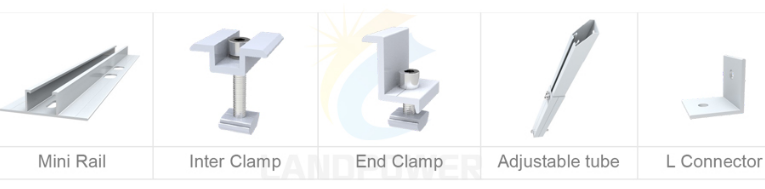
    The bifacial solar panel mounting systems is quick and easy solutions, all the components are pre-assembled onfactory, less work to do on sites, just few components as below. It is quite easy to install If come with ground screw. There are two foundation solutions for the mounting systems, ground screw and concrete foundation.


    Structure overview


    Back side view


    Front side view


    TECHNICAL INFORMATION

    Install site: Open Field

    Module Arrangement: Landscape

    Tilt Angle: 0-65 deg

    Main Material: Aluminum 6005 T5


    If you need this product, please feel free to contact us. Hope can work with you to cut your cost and reach mutual benefit.  (sales7@landpowersolar.com)

  • Landpower Solar PV mounting systems

    Landpower Solar PV mounting systems


    South Africa targeting up to 5 GW of new renewables per year.


    The South African government has formally approved the SAREM.Key targets in the SAREM include driving local industrial development through a minimum of 3 GW of new renewable energy projects per year, increasing to 5 GW annually by 2030.


    (From PV Magazine, PATRICK JOWETT,APRIL 7, 2025)


    Landpower Solar Project Case

    Project- 01


    Project- 02


    Project-03


    Project -04


    Accessories


    If you are interesting in our products,feel free contact to us.

    Emailsales9@landpowersolar.com


  • Side of Pole Solar Mounting

    Side of Pole Solar Mounting

    The Side of Pole Mount is design to install solar panel on side of single pole,the tilt angle can be adjustable,they come with less components make them quick and fast installation. And the standardized items ensure them easy to keep stocks. They can be 1-3 panel side of pole mount,it is better mounting for telephone pole,telegraph pole,lamp pole etc,flexible to install on to pole.


    Technical information

    Wind Load:60m/s

    Snow Load1.4kn/m2

    ApplicationWIFI repeaters,Solar Street Light

    MaterialAluminium Profile 6005-T5

    Solar ArrangementLandscape or Portrait

    Warranty12 years warranty and up to 25 years lifespan


    If you are interesting in our products,feel free contact to us.

    Emailsales9@landpowersolar.com


  • Reducing Costs in Hydrogen Production How Alkaline Electrolyzers Offer a Solution Introduction

    As the world shifts toward clean energy, green hydrogen—produced using renewable electricity—has emerged as a key player in decarbonizing industries like transportation, steel, and chemicals. However, a major barrier to widespread adoption is high production costs. Among the available electrolysis technologies, alkaline electrolyzers (ALK) present a promising path to cost reduction.


    In this blog, we explore:

    Why hydrogen production costs need to decrease

    How alkaline electrolyzers work and their cost advantages

    Recent advancements making ALK more competitive

    The future outlook for affordable green hydrogen


    The Challenge: High Costs of Green Hydrogen

    Currently, most hydrogen is produced from fossil fuels (gray hydrogen), which is cheap but emits CO₂. Green hydrogen, made via water electrolysis powered by renewables, is clean but expensive due to:

    High electricity costs (if not from surplus renewables)

    Capital expenditures of electrolyzers

    Maintenance and efficiency losses

    For green hydrogen to compete, electrolyzer costs must drop significantly—and alkaline electrolyzers are leading the charge.


    Why Alkaline Electrolyzers (ALK)?

    Alkaline electrolyzers are one of the oldest and most mature electrolysis technologies. Compared to alternatives like PEM (Proton Exchange Membrane) and SOEC (Solid Oxide Electrolysis Cells), ALK offers:

    1. Lower Capital Costs

    No expensive materials: Unlike PEM electrolyzers, which require platinum and titanium, ALK uses nickel-based electrodes and liquid alkaline electrolytes (KOH or NaOH), reducing material costs.

    Simpler construction: ALK operates at lower pressures and temperatures, avoiding costly high-performance components.

    2. Longer Lifespan & Durability

    Proven reliability: ALK systems often exceed 60,000–100,000 hours of operation with proper maintenance.

    Less sensitivity to impurities: Unlike PEM, ALK tolerates varying water quality better, reducing pretreatment costs.

    3. Scalability for Industrial Use

    Large-scale hydrogen production: ALK systems are already used in ammonia plants and refineries, benefiting from economies of scale.

    Compatibility with intermittent renewables: While PEM responds faster to variable power, newer ALK designs are improving flexibility.

    Recent Innovations Driving Costs Down


    While ALK has traditionally lagged behind PEM in efficiency, recent advancements are closing the gap:

    1. Advanced Electrode Materials

    Nanostructured nickel catalysts improve efficiency, reducing energy consumption.

    Coating technologies enhance durability, lowering replacement costs.

    2. Dynamic Operation for Renewable Integration

    New ALK designs allow rapid load-following, making them better suited for wind and solar power fluctuations.

    3. Manufacturing Scale-Up

    Mass production of ALK stacks reduces per-unit costs.

    4. Hybrid Systems (ALK + PEM)

    Some projects combine ALK’s low cost with PEM’s responsiveness, optimizing performance.


    The Future: Can ALK Make Green Hydrogen Affordable?

    With continued R&D and scaling, alkaline electrolyzers could help reduce the cost of green hydrogen, making it competitive with fossil-based hydrogen. Key steps include:

    ✔ Further efficiency improvements (targeting <45 kWh/kg H₂)

    ✔ Automated manufacturing to cut production costs

    ✔ Integration with cheap renewable power (e.g., excess solar/wind)


    While PEM electrolyzers often steal the spotlight for their high efficiency and flexibility, alkaline electrolyzers remain a cost-effective workhorse for large-scale green hydrogen production. With ongoing innovations, ALK could play a crucial role in making clean hydrogen affordable—accelerating the transition to a zero-emission energy future.

  • Multiple design schemes for Large-Scale Solar Farms , Which one is the most you need?

    Ground mounting systems are a critical component of large-scale solar farms, providing structural support for solar panels while optimizing energy production. These systems must be durable, cost-effective, and adaptable to various terrains.


    • Fixed-Tilt Systems


    Panels are set at a fixed angle (optimized for latitude).

    Simple, low-cost, and low-maintenance.

    Less efficient than tracking systems but more reliable.


    mounting systems solar


    • Foundation Types


    Ground Screws – Quick installation, reusable, good for most soil types.

    Concrete Ballasts – No deep excavation, used in rocky or difficult terrains.

    Pile-Driven Foundations – Steel beams driven into the ground, ideal for soft soils.

    Concrete Footings – Highly stable, used in high-wind or seismic zones.


    • Mounting Structure Materials


    Galvanized Steel and ZAM Steel– Most common, durable, and corrosion-resistant.

    Aluminum – Lightweight, rust-proof, but more expensive.

    Composite Materials – Emerging option for reduced weight and cost.


    solar panels on the ground


    • Design Considerations for Large-Scale Solar Farms


    Land Utilization – Optimizing row spacing to minimize shading (using tools like PVsyst).

    Terrain Adaptability – Adjusting for slopes, uneven ground, or rocky terrain.

    Wind & Snow Loads – Ensuring structural stability in extreme weather.

    Corrosion Resistance – Critical for long-term durability (25–30 years).

    Ease of Installation & Maintenance – Modular designs speed up deployment.

    We will provide the most reasonable design scheme according to the longitude, latitude and terrain requirements , and different levels of corrosion protection required of the project.


    Welcome to send inquiries to info@kinsend.com, design drawings and quotation list will be provided .


  • Project Overview | Ballasted Solar Mounting System in Kota Kinabalu, Malaysia

    JinMega is proud to support the 1MW PV  project in Kota Kinabalu, Malaysia. This project adopts a combination of ballasted roof mounting and metal roof mounting systems, tailored for local rooftop conditions. 


    The ballasted solution is crafted from corrosion-resistant AL6005-T5 aluminum, ideal for coastal environments. Its lightweight design ensures quick installation, while ballast blocks provide structural stability without roof penetration. The system is also highly adaptable, allowing on-site adjustments and customization. 

    Watch the project in action and see how our solutions deliver both performance and adaptability.


    👉 Explore our Ballasted Mounting System here.