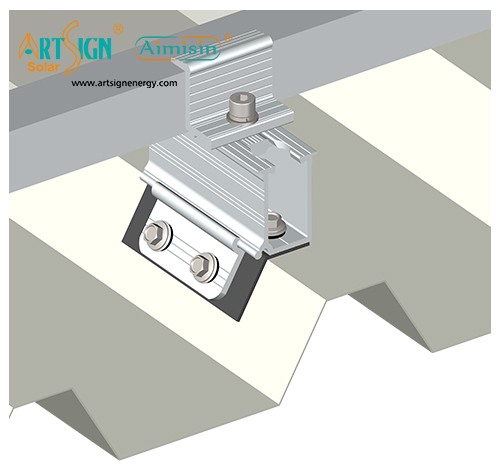
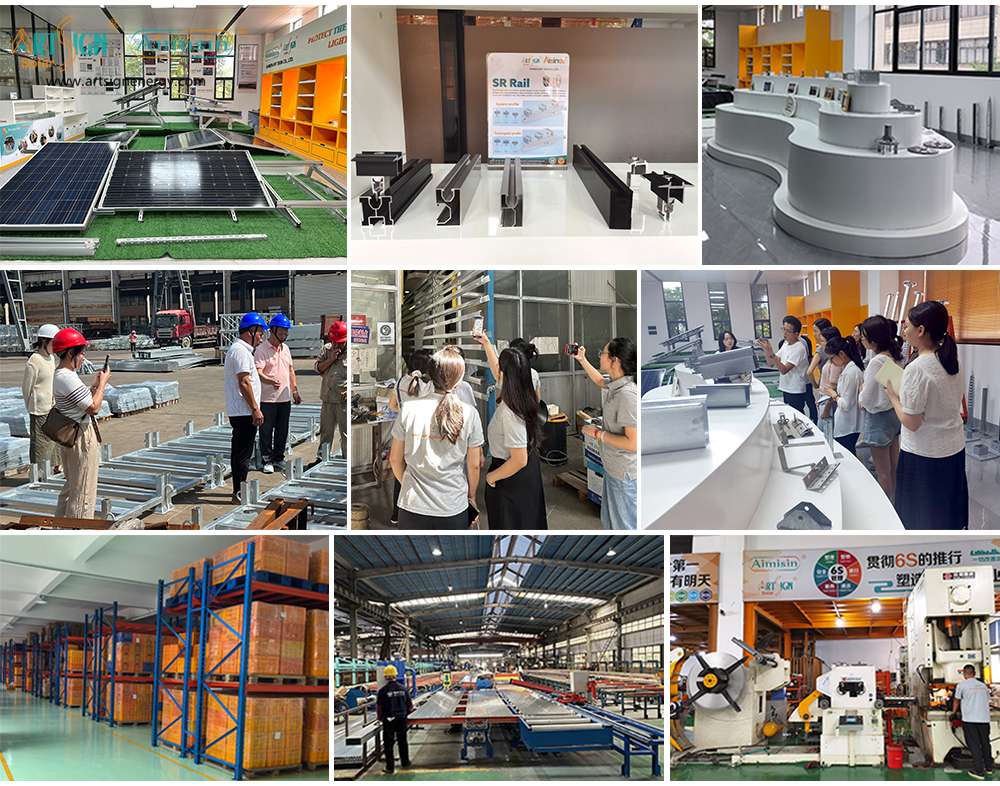
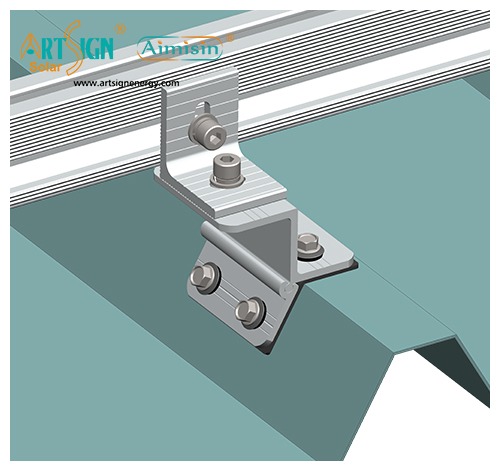
• Why use The Mini Rail for The Solar Panel Mount Installation

    As a top 10 solar mounting structure system supplier in China, ART SIGN promote the development of clean energy for clients. Customized services with OEM available .Nowadays more and more install the solar panels on metal roof themselves ,

    And mini rail will be good choice for them.


    Today we will introduce one of our mini rails for you:


    solar mounting structure system

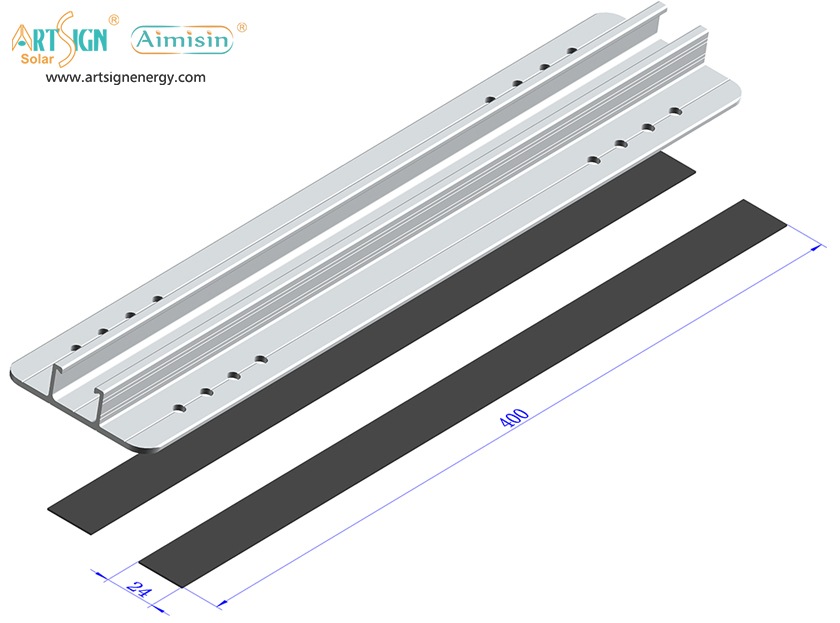
    Item No.: AS-DR-07

    Material: AL6005-T5

    Length: 385mm or 400mm or customized sizes

    EPDM will be sticked to the rail before packing.


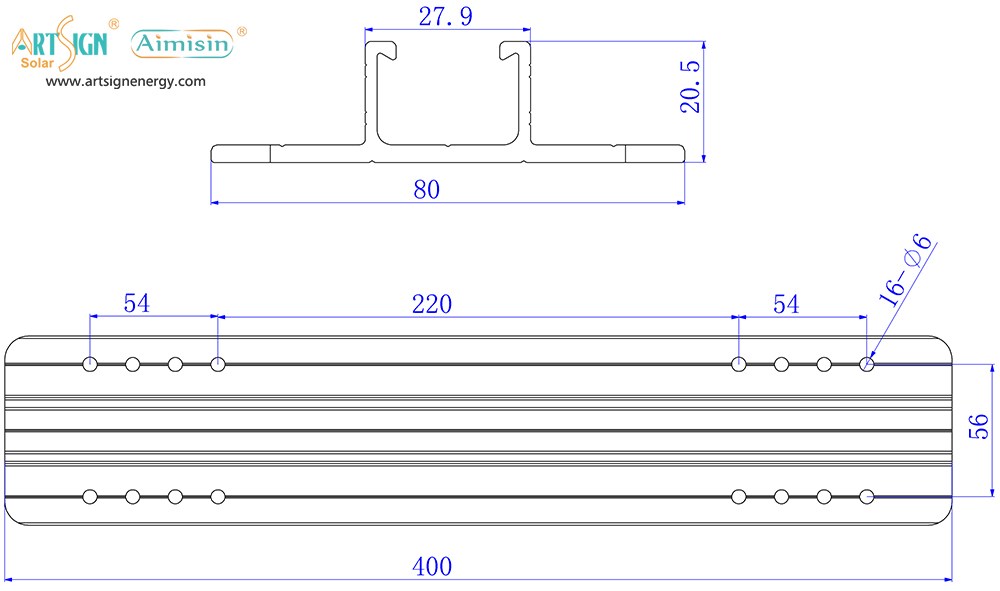
    Detail sizes below:

    Features of mini rail system


    Features of mini rail system:
    1.Easy installation:
    The mini rail system is typically designed for easy installation, which can save time and labor costs during the installation process.
    2.Versatility:
    The mini rail can be used in a variety of applications, including rooftop installations, ground-mounted systems, and even on mobile or portable solar panels.
    3.Cost-effective:
    The use of a mini rail system can be a cost-effective way to improve the performance and durability of a solar panel installation, without the need for expensive or complex mounting systems.
    4.Compatibility:
    The mini rail is designed to be compatible with a wide range of solar panel sizes and types, making it a versatile and flexible option for different solar energy projects.
    5.Enhanced aesthetics:
    The sleek and modern design of the mini rail can enhance the overall appearance of the solar panel installation, making it more visually appealing.


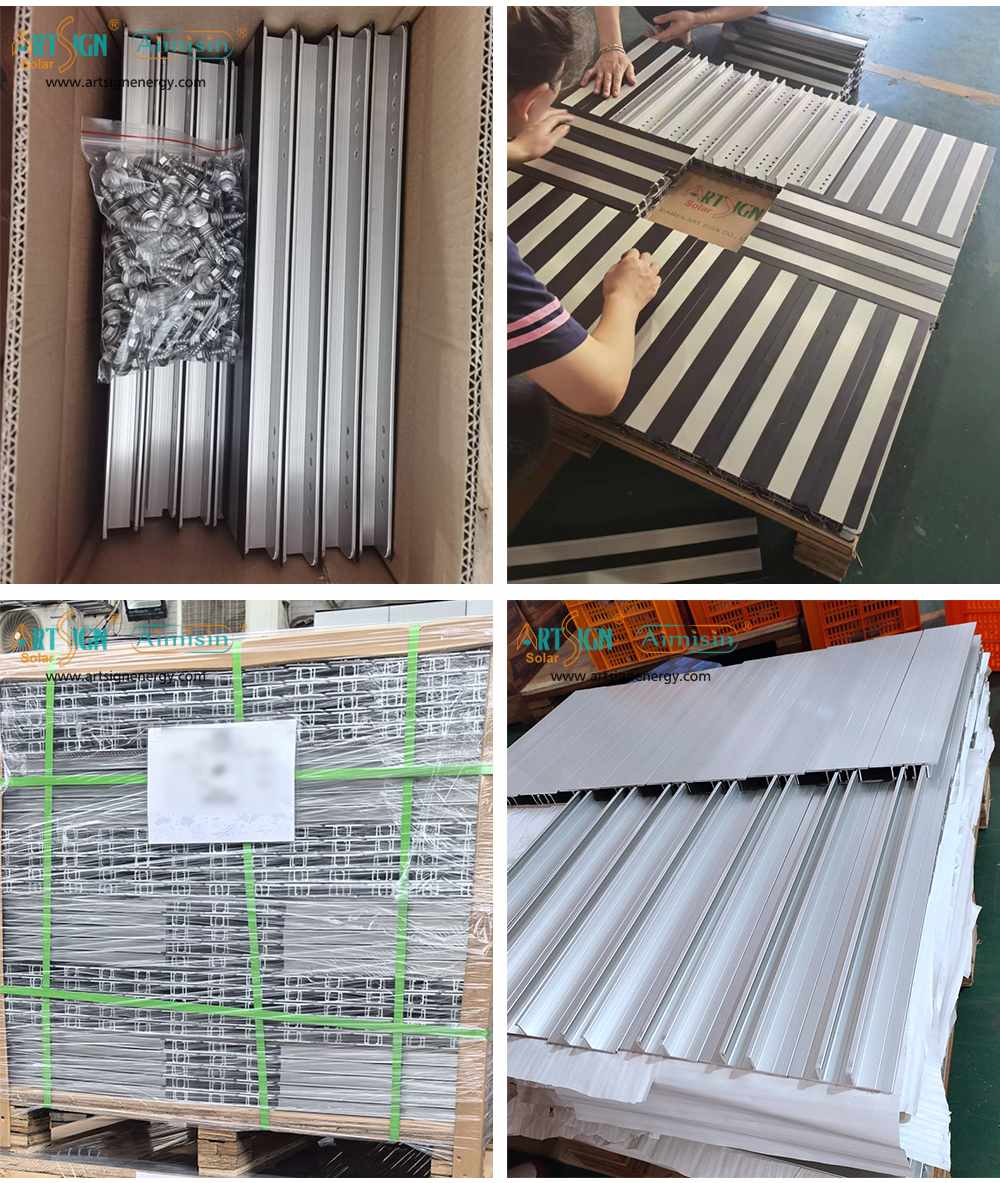
    Packing for the mini rails:


    Packing for the mini rails

    And why choose ART SIGN ?
    1.Versatile, flexible and the right solution for every customer requirement.
    Products that meet the highest standards. Components that complement each other perfectly
    2.In-house professional team with design and manufacture
    Our products are easy to install, robust and safe.
    For any inquiry for solar mounting system rails,
    solar ground mounting structure, solar flat roof mounting structure or other solar components, pls contact us, E-mail: sales@artsign.net.cn, Whatsapp / Wechat /Skype: +86-18030235875,thanks.


    solar flat roof mounting structure


  • 80W solar lamps are high-power solar lighting equipment

    80W solar lamps Characteristics


    80W intelligent control function street lamp


    High-brightness lighting: With a power of 80W, it can provide relatively bright light and meet the lighting needs of various scenarios, such as urban streets, rural roads, squares, parks, parking lots and other places.


    High-efficiency photoelectric conversion: Generally equipped with larger-sized solar panels, it has a high photoelectric conversion efficiency and can be charged quickly under sufficient sunlight, providing adequate power support for the lamps. For instance, some 80W solar lamps that use monocrystalline silicon solar photovoltaic panels can meet the night lighting needs of the lamps after being charged for 5 to 8 hours.


    Intelligent control functions: It is equipped with intelligent control functions such as light control, time control and human body sensing. The light control sensor can automatically turn the lamp on and off according to the intensity of the ambient light. The time control function can set the lighting time of the lamps. The human body sensing function can automatically increase the brightness when someone approaches and restore it to a lower brightness or turn it off after the person leaves, achieving the dual effects of energy conservation and convenience.


    Good durability: The key components of the product, such as solar panels, lithium batteries, LED lights and charging controllers, etc., are usually made of high-quality materials and advanced manufacturing processes, featuring excellent water resistance, lightning protection and corrosion resistance. They can operate normally in harsh outdoor environments and ensure long-term stable lighting services.


    80W intelligent control function street lamp


    Application scenarios
    Outdoor road lighting: It can be used for lighting urban secondary roads, rural roads, etc., providing safety guarantees for pedestrians and vehicles. Moreover, there is no need to lay cables, reducing construction and maintenance costs.


    Square and park lighting: It can provide sufficient light for squares, parks, scenic spots and other places, meeting people's needs for leisure, entertainment and sightseeing at night. Meanwhile, its environmental protection features are also in line with the environment of these places.


    Industrial park lighting: It is suitable for lighting in areas such as roads and factory buildings within industrial parks, helping enterprises save on electricity costs. Moreover, the stability of solar lamps can also meet the requirements of industrial production environments.


    Parking lot lighting: Whether it is the entrance and exit of an open-air parking lot or an underground parking lot, 80W solar lamps can provide good lighting, facilitating the entry and exit of vehicles and the movement of people, while reducing the reliance on traditional electricity.


  • Working Principle and Future Development of Solar Panels An Efficient and Eco-Friendly Energy Solution

    Solar panels work through the photovoltaic effect, which converts sunlight into electricity. Each solar panel is made up of multiple photovoltaic cells, typically composed of semiconductor materials like silicon. When sunlight hits these materials, photons excite electrons, creating an electrical current. This current is then transmitted through wires to power batteries or other devices, providing energy for homes or industries.


    By converting solar energy into clean electricity, solar panels not only save on electricity bills but also reduce carbon emissions, making them an effective solution to the global energy crisis and climate change.


    Environmental Benefits of Solar Panels

    The use of solar panels is not only economically beneficial but also has a profound positive impact on the environment. First, solar energy is a renewable resource—abundant and inexhaustible—and its use does not produce any pollutants or greenhouse gas emissions. Thus, widespread adoption of solar panels helps reduce reliance on fossil fuels, effectively mitigating air pollution and slowing global warming.


    Additionally, the manufacturing and lifespan of solar panels are continually being optimized. Modern solar panels are produced in increasingly eco-friendly ways, and recycling technologies are advancing, ensuring that their environmental footprint is minimized.


    Evolution of Solar Photovoltaic Efficiency and Its Bright Future

    Solar photovoltaic efficiency has been steadily improving over the years, with advancements in photovoltaic materials and cell design. From the initial efficiency of 5-6%, to the current standard of 15-20%, technological advancements have made solar power more economically viable and practical.


    Particularly, N-Type Bifacial Solar Panel utilize both sides of the panel to absorb sunlight, improving efficiency. This technology is making solar panels more adaptable in various environments, and as technology progresses, the future of solar energy systems looks brighter.


    The Importance of Solar Panel Maintenance and Repair

    Although solar panels are highly durable, regular maintenance and repairs are essential for their long-term performance. While solar panels typically last for over 20 years, improper cleaning or lack of inspection can lead to reduced efficiency. Common maintenance tasks include:


    Regularly cleaning the surface of solar panels to remove dust, dirt, and debris, ensuring they absorb as much sunlight as possible.


    Checking the connections of the panels to ensure proper electrical flow.


    Periodically inspecting the inverter and other system components to ensure smooth operation.


    Timely repairs can extend the lifespan of the system and maintain its efficiency.


    3 Best Places for Your Solar Panel Installation

    The location of solar panel installation plays a crucial role in their efficiency. Different installation environments can impact the performance of solar panels. Here are the three best places for solar panel installation:


    Roof: The roof is the most common and ideal location for installation. Most homes provide enough space for solar panels, and roofs are often unobstructed, receiving maximum sunlight.


    Solar Carports: Solar carports are another excellent installation option. Solar panels installed on carports not only provide electricity for the home but also charge electric vehicles.


    Open Land: For homes or buildings without suitable rooftops, open land can serve as an ideal space for solar panel installation. Large-scale solar farms can convert vast areas of land into electricity, meeting substantial energy demands.


    What Are The Main Advantages of Solar Panels?

    Solar panels offer numerous notable benefits, especially in the following areas:


    Environmentally Friendly: Solar energy is clean and reduces the release of greenhouse gases, which helps decrease air pollution.


    Sustainability: Solar energy is a renewable resource, making it a long-term energy solution.


    Cost Savings: Installing solar panels reduces reliance on traditional energy sources, significantly lowering electricity bills in the long run.


    Energy Independence: Solar panels allow homeowners and businesses to become less dependent on the external power grid, enhancing energy independence.


    Choosing the right solar panel system not only boosts energy efficiency but also offers long-term economic returns.


    N-Type Solar Panels: The Future of Solar Energy

    For those seeking efficient, durable, and environmentally friendly solar panels, Full Black N-Type Solar Panel Company offers excellent N-type all-black solar panels. Compared to traditional P-type solar cells, N-type panels offer superior efficiency, durability, and low-temperature performance. Furthermore, N-type bifacial solar panels (N Type Bifacial Solar Panel Manufacturer) capture sunlight from both sides, increasing power generation efficiency, making them a key development in the future of solar energy.


    If you’re looking for bulk purchasing, wholesale All black Solar Panels provides high-quality, competitively priced solar panels, making your solar energy project more economical and sustainable.

  • Understanding the Benefits of PEM Hydrogen Production Systems for Industrial Applications

    Introduction

    As industries worldwide strive to reduce carbon emissions and transition to cleaner energy sources, hydrogen has emerged as a key player in the decarbonization of heavy industries, transportation, and energy storage. Among the various hydrogen production technologies, Proton Exchange Membrane (PEM) electrolysis stands out for its efficiency, flexibility, and compatibility with renewable energy.


    This blog explores the advantages of PEM hydrogen production systems and why they are increasingly becoming the preferred choice for industrial applications.


    What is PEM Electrolysis?

    PEM electrolysis uses a solid polymer electrolyte membrane to split water into hydrogen and oxygen using electricity. Unlike traditional alkaline electrolyzers, PEM systems operate with pure water (no liquid alkaline electrolyte), making them more compact, efficient, and adaptable to variable power inputs—such as those from wind and solar energy.


    Key Benefits of PEM Hydrogen Production for Industries

    1. High Efficiency & Energy Savings

    PEM electrolyzers achieve 60-75% efficiency, significantly higher than alkaline systems (50-60%).


    Lower energy consumption per kg of hydrogen produced, reducing operational costs.


    2. Fast Response & Dynamic Operation

    Can ramp up from 0% to 100% capacity in seconds, making them ideal for pairing with intermittent renewable energy sources.


    Unlike alkaline electrolyzers (which require steady power), PEM systems can adjust quickly to fluctuating electricity supply.


    3. High-Purity Hydrogen Output

    Produces >99.99% pure hydrogen without requiring additional gas purification.


    No risk of alkali contamination, making it suitable for fuel cells, electronics manufacturing, and chemical processes.


    4. Compact & Modular Design

    Smaller footprint compared to alkaline systems, allowing for easier integration into industrial plants.


    Scalable—can be deployed in small on-site units or large centralized hydrogen production facilities.


    5. High-Pressure Hydrogen Production

    Some PEM systems can directly generate hydrogen at 3.5 MPa (500 psi) or higher, reducing the need for external compressors.


    Saves costs in applications requiring pressurized hydrogen, such as fueling stations and industrial gas supply.


    6. Enhanced Safety & Reliability

    Solid electrolyte eliminates risks of leakage or corrosion associated with liquid alkaline systems.


    Fewer moving parts result in lower maintenance needs.


    7. Renewable Energy Integration

    Best suited for green hydrogen production when paired with solar/wind power.


    Enables industries to meet sustainability goals while maintaining operational flexibility.


    Industrial Applications of PEM Hydrogen

    ✔ Steel & Metal Processing

    Replaces fossil-fuel-based hydrogen in direct reduction iron (DRI) processes.


    ✔ Chemical & Refining Industries

    Provides clean hydrogen for ammonia production, hydrocracking, and desulfurization.


    ✔ Transportation & Fueling

    Powers hydrogen refueling stations (HRS) for fuel cell vehicles (FCEVs).


    ✔ Energy Storage & Grid Balancing

    Stores excess renewable energy as hydrogen, which can be converted back to electricity via fuel cells.


    ✔ Electronics & Semiconductor Manufacturing

    Supplies ultra-high-purity hydrogen needed for wafer fabrication and LED production.


    Challenges & Future Outlook

    While PEM electrolysis offers numerous advantages, challenges remain:


    Higher upfront costs compared to alkaline systems (though prices are declining).


    Dependence on rare materials (e.g., platinum catalysts), though research is reducing these requirements.


    However, with advancements in membrane technology, increased production scale, and government incentives, PEM electrolyzers are expected to become the dominant hydrogen production method for high end hydrogen demand field by 2030.


    Conclusion

    PEM hydrogen production systems provide industries with a clean, efficient, and flexible solution for decarbonizing operations. Their ability to integrate seamlessly with renewables, produce high-purity hydrogen, and operate dynamically makes them a future-proof investment for companies committed to sustainability.


    As green hydrogen demand grows, PEM electrolysis will play a pivotal role in helping industries transition away from fossil fuels—ushering in a new era of low-carbon manufacturing and energy systems.


    Is your industry considering hydrogen solutions? PEM technology might be the key to unlocking a cleaner, more efficient future.

  • Product Spotlight | Roof Triangle Brackets Solar Mounting System

    The JinMega Triangle Mounting System is a smart and affordable solution for rooftop solar. It works with both ballasted and roof-penetrating setups, and is made from high-quality aluminum (AL6005-T5) and steel (SUS304), offering great strength, stability, and long-term resistance to corrosion. 


    Highlights

    ·Stable by Design

    With a sturdy triangle design and durable materials, the system keeps your solar panels safe and steady—even in tough weather.

    ·Efficient to Install

    Pre-assembled parts make installation fast and easy, helping you save time and reduce labor costs on-site.

    ·Flexible Application

    Can be used on metal or concrete roofs. Offers adjustable or fixed tilt angles, and supports different mounting options, so it’s flexible enough for many roof types. 


    From metal to concrete roofs, the JinMega Triangle Mounting System gives you a dependable base for solar projects of all kinds.

    Explore more about our solutions, please click here. 

  • Choosing Solar Panels The Three Key Types You Need to Know

    Choosing the right solar panel is a critical step toward achieving energy independence and sustainability. Whether you’re a homeowner or a business, understanding the strengths and limitations of each solar panel type will help you make the most informed decision for your energy needs.


    The Basics of Solar Panel Types

    Solar panels are primarily divided into three types: Monocrystalline Silicon Solar Panels, Polycrystalline Silicon Solar Panels, and Thin-Film Solar Panels. Each type has its own unique features, pros and cons, and ideal use cases. Understanding these characteristics will help you make an informed decision.


    1. Monocrystalline Silicon Solar Panels

    Features

    Monocrystalline silicon solar panels are made from high-purity silicon wafers and offer very high efficiency and durability. They typically have a black appearance and round or rounded-edge rectangular shapes, making them popular for their high energy conversion rates.


    Advantages

    High Efficiency: Monocrystalline panels typically have an efficiency range of 18% to 22%, making them ideal for installations with limited space.

    Long Durability: These panels have a long lifespan, often lasting 25 years or more.

    Ideal for High-Demand Applications: They perform especially well in sunny regions, providing higher energy output.


    Disadvantages

    Higher Cost: Due to their complex manufacturing process, monocrystalline panels tend to be more expensive, making them more suitable for those with a larger budget.


    Best Use Cases

    Monocrystalline panels, such as the Full Black N-Type Solar Panel options, are perfect for residential, commercial, and industrial applications, especially for users with higher energy demands or limited installation space. They offer an ideal solution for those seeking efficient and long-lasting solar energy.


    2. Polycrystalline Silicon Solar Panels

    Features

    Polycrystalline silicon solar panels are made from multiple silicon crystals and usually have a blue appearance. While they are slightly less efficient than monocrystalline panels, they offer a cost-effective alternative.


    Advantages

    Lower Cost: The manufacturing process for polycrystalline panels is simpler, making them more affordable.

    Good Stability: While their efficiency is slightly lower, they still provide reliable energy output in most applications.


    Disadvantages

    Lower Efficiency: Polycrystalline panels typically have an efficiency range of 15% to 18%, which means you may need a larger area for the same energy output.

    Shorter Lifespan: Polycrystalline panels generally have a shorter lifespan compared to monocrystalline panels.


    Best Use Cases

    Polycrystalline panels are ideal for homeowners or small to medium-sized businesses on a budget, especially when larger installation spaces are available. They provide a cost-effective solar energy solution.


    3. Thin-Film Solar Panels

    Features

    Thin-film solar panels are made from thin layers of semiconductor materials and can be applied to various surfaces, including curved or irregular surfaces. They generally have lower efficiency but offer flexibility in large-scale installations.


    Advantages

    High Flexibility: Thin-film panels can be applied to different surfaces, making them suitable for irregular or curved areas.

    Low Cost: Thin-film panels are usually cheaper to produce due to the simpler manufacturing process.

    Lightweight: These panels are lightweight, which makes them easy to transport and install.


    Disadvantages

    Lower Efficiency: Thin-film solar panels usually have an efficiency range of 10% to 12%, so they require more installation space to generate the same amount of power.

    Shorter Lifespan: Compared to other types, thin-film panels have a shorter lifespan, typically around 10 to 15 years.


    Best Use Cases

    Thin-film panels are best suited for large-scale commercial projects or solar farms, where space is not a constraint. They are also ideal for situations where aesthetics are less important.


    How to Choose the Right Solar Panel for Your Needs

    When selecting a solar panel, consider the following factors:

    Budget

    If you have a higher budget and want high efficiency and long lifespan, monocrystalline panels are the best choice. However, if you are on a tighter budget, polycrystalline or thin-film panels can provide a more cost-effective option.


    Installation Space

    If you have limited roof space or installation area, monocrystalline panels, like the Full Black N-Type Solar Panel, are a great choice due to their higher efficiency. On the other hand, if you have a larger space, polycrystalline or thin-film panels can offer a more economical solution.


    Geographical Location

    If you live in an area with abundant sunlight, monocrystalline panels will maximize energy production. In regions with more balanced sunlight conditions, polycrystalline or thin-film panels will still perform reliably.


    Long-Term Return on Investment

    While monocrystalline panels are more expensive upfront, their higher efficiency and longer lifespan make them a worthwhile long-term investment. If you plan to use your system for over 25 years, monocrystalline panels, such as Full Back Bifacial 440W Solar Panel, are a smart choice.


    Choosing the right solar panel is a critical step toward achieving energy independence and sustainability. Whether you’re a homeowner or a business, understanding the strengths and limitations of each solar panel type will help you make the most informed decision for your energy needs.


    Enecell’s all-black monocrystalline solar panels are crafted with cutting-edge technology and premium materials to deliver superior performance and long-lasting durability. With a 25-year power warranty, our panels ensure reliable energy production for years to come.

  • Green Hydrogen Production Why Alkaline Electrolyzers Are Leading the Market

    Introduction

    As the world shifts toward renewable energy, green hydrogen—produced using electrolysis powered by clean electricity—has emerged as a key player in decarbonizing industries like transportation, steelmaking, and chemicals. Among the different electrolyzer technologies, alkaline electrolyzers (ALK) currently dominate the market. But why?

    In this blog, we’ll explore the advantages of alkaline electrolyzers, their role in green hydrogen production, and why they remain the preferred choice for large-scale projects.


    What Are Alkaline Electrolyzers?

    Alkaline electrolyzers have been around for decades and are one of the most mature technologies for hydrogen production. They use an alkaline solution (typically potassium hydroxide, KOH) as an electrolyte and nickel-based electrodes to split water (H₂O) into hydrogen (H₂) and oxygen (O₂) through an electrochemical reaction.

    Key Reaction:

    At the cathode: 2H₂O + 2e⁻ → H₂ + 2OH⁻
    At the anode: 2OH⁻ → ½O₂ + H₂O + 2e⁻


    Why Alkaline Electrolyzers Dominate the Market

    1. Proven Technology & Reliability

    Alkaline electrolyzers have been used for industrial hydrogen production since the early 20th century. Their long track record makes them a low-risk choice for large-scale projects compared to newer technologies like PEM (Proton Exchange Membrane) or SOEC (Solid Oxide Electrolyzers).

    2. Lower Capital Costs

    One of the biggest advantages of ALK systems is their cost-effectiveness. They use non-precious metals (e.g., nickel instead of platinum or iridium), making them significantly cheaper than PEM electrolyzers, which rely on expensive catalysts.

    3. Scalability for Industrial Use

    Alkaline electrolyzers are ideal for large-scale hydrogen production, such as ammonia plants or refineries.

    4. Longer Lifespan & Durability

    With fewer degradation issues than PEM systems, ALKs often have lifespans about 20 years, reducing long-term operational costs. Their robust construction makes them suitable for harsh industrial environments.

    5. Compatibility with Renewable Energy

    While ALKs traditionally required stable power inputs, advancements in dynamic operation have improved their ability to work with intermittent renewable sources like wind and solar.


    Challenges & Future Improvements

    Despite their advantages, alkaline electrolyzers face some limitations:

    Lower Efficiency at Partial Loads – They perform best at steady, high-capacity operation.

    Slower Response Times – Less flexible than PEM electrolyzers for rapid start-stop cycles.

    Liquid Electrolyte Maintenance – Requires periodic refilling and corrosion management.


    However, innovations such as:
    Advanced electrode materials (improving efficiency)
    Zero-gap configurations (reducing energy losses)
    Hybrid systems (ALK + PEM)
    are helping ALKs stay competitive.


    Conclusion: Alkaline Electrolyzers Lead the Green Hydrogen Race

    While newer electrolyzer technologies are gaining attention, alkaline electrolyzers remain the market leader due to their cost efficiency, scalability, and proven reliability. As green hydrogen demand grows, ALKs will continue playing a crucial role in the energy transition—especially for large industrial applications.

    For now, they are the go-to solution for cost-effective, large-scale green hydrogen production.

  • Understanding Energy Storage Systems and Their Efficiency

    In recent years, as the world gradually shifts towards renewable energy sources like solar and wind power, energy storage systems have become increasingly important. These systems are used to store energy for later use, ensuring a reliable and continuous power supply even when sunlight or wind is insufficient. So, what exactly is an energy storage system, what is the best method for storing energy, and which is the most efficient? Let's explore these questions.


    What is an Energy Storage System?

    An Energy Storage System (ESS) is a device or technology used to store energy for later use. It works by converting electrical energy into a form that can be stored (such as chemical energy, mechanical energy, or thermal energy), and then converting it back to electrical energy when needed. Energy storage systems are particularly useful for balancing the fluctuations in renewable energy supply, as these energy sources (like solar and wind) are often affected by weather conditions.


    Common energy storage methods include:

    Battery Storage: Storing energy in chemical form is the most common energy storage method.

    Pumped Hydro Storage: Using the principle of hydropower, water is pumped to a higher elevation to store energy, and then released to generate electricity.

    Compressed Air Energy Storage (CAES): Storing energy by compressing air, which is then released to drive turbines and generate electricity.

    Thermal Storage: Storing energy in the form of heat or cold, typically using materials like molten salts, which can be released when needed.


    Off-grid Solar Energy Storage System: A Solution for Remote Areas

    The Off-grid Solar Energy Storage System is an ideal choice for areas that are far from the power grid. This system combines solar panels with energy storage devices, providing reliable power in the absence of a grid. Not only is this system environmentally friendly, but it also ensures a stable power supply for users in locations where grid electricity is unavailable.


    Such systems are especially suitable for rural, mountainous, or remote areas. With the energy collection capability of solar panels and the efficient storage capacity of batteries, the Off-grid Solar Energy Storage System enables users to achieve energy independence, reducing reliance on external power supplies.


    All-in-One Residential Storage System: A Convenient and Efficient Home Energy Solution

    As energy demands continue to rise, the All-in-One Residential Storage System has become a preferred solution for home solar applications. This system integrates solar panels, storage batteries, inverters, and energy management systems into a single unit, providing homeowners with a comprehensive energy storage solution.


    The advantages of the all-in-one system include:

    Simplified Installation: Compared to traditional systems, users only need to install one device, reducing complexity.

    Space Efficiency: The integrated design saves space, making it ideal for residential use.

    Smart Management: These systems often come with intelligent battery management systems (BMS), which optimize battery usage and monitor battery health.

    The All-in-One Residential Storage System is perfect for homeowners who want to install a solar storage system in their homes, helping reduce energy consumption while increasing energy self-sufficiency.


    What is the Best Energy Storage System?

    The "best" energy storage system depends on specific application needs, efficiency, cost, scalability, and environmental impact. However, lithium batteries are currently the most widely used and versatile energy storage solution, especially for residential and commercial applications.


    The advantages of lithium batteries include:

    High Efficiency: Typically, the discharge efficiency is over 85%, effectively reducing energy loss.

    Compact Size: Flexible installation options, especially suitable for homes.

    Cost-Effective: Ideal for short to medium-term energy storage needs, with costs continuously decreasing in recent years.

    For large-scale storage, pumped hydro storage remains the most widely used method due to its ability to store large amounts of energy, though it requires specific geographical conditions.


    What is the Most Efficient Energy Storage Method?

    Energy storage efficiency refers to how much of the stored energy can be retrieved when needed. Based on efficiency, lithium batteries remain the most efficient energy storage method, typically achieving over 90% discharge efficiency. This means lithium batteries retain minimal energy loss during storage.


    The efficiency of other storage methods is as follows:

    Pumped Hydro Storage: Efficiency is about 70-80%, which, although lower than lithium batteries, still has significant advantages for large-scale energy storage.

    Compressed Air Energy Storage (CAES): Efficiency is around 70-80%, but its performance can be influenced by geological conditions and technology.


    What is the Most Promising Energy Storage Technology?

    Looking ahead, the most promising energy storage technologies are those that can overcome the limitations of current systems in terms of cost, scalability, and environmental impact. The following technologies are considered to have great potential:

    Solid-State Batteries: Solid-state batteries have the potential to revolutionize energy storage by offering higher energy density, better safety, and longer lifespans. Although they are still under development, they are seen as an important part of the future of energy storage.

    Flow Batteries: These batteries use liquid electrolytes and are expected to provide larger storage capacities and longer lifespans compared to traditional lithium batteries. Flow batteries also offer significant cost advantages, although they are still in the early stages of commercialization.

    Hydrogen Storage: Hydrogen fuel cells represent an emerging energy storage method, particularly suited for long-term and large-scale energy storage. Hydrogen can be produced using renewable energy and stored in gas form, later converted back to electricity through fuel cells. While hydrogen storage has high potential, it still faces challenges in efficiency and infrastructure development.

    Advanced Thermal Storage: Through materials like molten salts, thermal storage systems can store energy in the form of heat or cold and release it when needed. These systems have already been successfully used in large-scale solar power plants and have the potential to play a larger role in the future.


    As the world transitions to renewable energy, energy storage becomes a crucial component. While lithium batteries are currently the most effective and widely used solution, emerging technologies such as solid-state batteries, flow batteries, hydrogen storage, and advanced thermal storage are rapidly gaining attention and hold the potential to improve efficiency and reduce costs.


    Enecell, a renowned Solar Energy Storage System Manufacturer in China, provides integrated All-in-One Energy Storage Systems that combine inverters and lithium batteries. These systems are easy to install, have an elegant and simple design, and resemble home appliances when placed in a home, offering convenient and efficient solutions for residential energy storage.
  • Analysis of Causes for Low Cells Capacity

    |

    Low cell capacity is an intuitive judgment based on comparing the post-formation discharge capacity with the design value. If the measured capacity falls below the design specification, the first step is to verify whether the formation process parameters are correctly set (e.g., discharge current, charge duration, cutoff voltage, and formation temperature).
    ① If the formation steps are confirmed correct, retest the cell using alternative equipment or channels to rule out potential issues with the formation system.
    ② If the capacity remains normal after equipment replacement, the original formation equipment is faulty.
    ③ If the low-capacity issue persists after retesting, the cell is confirmed to exhibit genuine low capacity.
    After confirming low capacity, further analysis is required to determine its frequency and severity. Before systematic root-cause analysis, disassemble and inspect the fully charged low-capacity cells. If no abnormalities are found, potential causes may include insufficient positive electrode coating weight or inadequate design margin. If defects are detected, design or manufacturing issues should be considered.

    battery tester

    Root Cause Analysis: Design and Manufacturing Perspectives

    I. Design-Related Factors

    1. Material Compatibility

    The compatibility between the negative electrode and electrolyte critically impacts capacity. For newly introduced anode materials or electrolytes, repeated lithium plating observed during testing strongly indicates material mismatch. Potential mismatch mechanisms include:

    ① Poorly formed, overly thick, or unstable SEI layer during formation.

    ② PC (propylene carbonate) in the electrolyte causing graphite exfoliation.

    ③ Excessive designed electrode areal density/compaction density hindering high-rate charge/discharge capability.

    2. Capacity Design Margin

    Positive Electrode Specific Capacity: Design must account for coating tolerances, formation equipment errors, and capacity loss from tab adhesion. For new materials, accurately evaluate the achievable specific capacity under the given system (anode/electrolyte pairing). Note that specific capacity varies with formation rate, charge cutoff current, cycling rates, and electrolyte formulation. Overestimating positive electrode capacity leads to inflated design values and actual low-capacity cells.

    Negative Electrode Excess and CB Value: Excessive negative electrode loading initially enhances positive electrode utilization by 1–2% but beyond optimal levels, excessive irreversible lithium consumption during SEI formation reduces first-cycle discharge capacity.

    3. Electrolyte Filling and Retention

    Insufficient electrolyte filling reduces lithium-ion intercalation/deintercalation efficiency. Cells with inadequate electrolyte retention exhibit dry electrodes and thin lithium plating on the anode surface, directly contributing to capacity loss.


    II. Manufacturing-Related Factors

    1. Coating Areal Density Deviation

    Underweight coating of positive/negative electrodes directly causes low capacity. For positive electrodes, confirm coating weight via post-drying gravimetric analysis. Non-uniform coating thickness ("yin-yang coating"), particularly negative electrode undercoating, is another contributor. Overcoating of positive electrodes may lower specific capacity but often increases total capacity.

    2. Over-Compaction During Calendering

    Over-compaction damages active material structure, evidenced by shiny electrode surfaces. In cathodes, this disrupts lithium deintercalation; in anodes, it induces surface lithium plating and capacity fade.

    3. Assembly Tolerances

    Poor electrode alignment, separator wrinkles, or internal micro-shorts increase local impedance and degrade capacity. Wrinkled separators cause incomplete lithium intercalation (non-golden anode appearance) at affected regions.

    4. Moisture Content Control

    Elevated moisture levels (from electrodes, electrolyte, improper glovebox dew point, or degassing processes) trigger side reactions and capacity loss.

    5. Environmental Controls

    High humidity accelerates hydrolysis reactions, while low temperatures impede lithium-ion diffusion, both reducing capacity. Formation temperature deviations also affect capacity measurement accuracy.

    6. Other Factors

    Foreign Contamination: Metallic/magnetic impurities increase self-discharge, leading to apparent low capacity post-formation.

    Pre-formation Storage: Prolonged storage under high temperature/humidity degrades electrodes and electrolytes, causing capacity loss.

    Ⅲ. Conclusion

    By systematically investigating these factors—from material compatibility and design margins to process controls and environmental conditions—the root cause of low capacity can be effectively identified and addressed.

    TOB NEW ENERGY provides advanced battery tester empower engineers and researchers to unlock comprehensive insights into battery performance through precise measurements and controlled experiments. Quantify energy storage capabilities with laboratory-grade accuracy using our battery capacity analyzers.

  • Comparative Analysis of Stacking vs. Winding Processes in Lithium Battery Manufacturing

    1. Process Principles


    Stacking Process:

    Anode and cathode sheets are cut to specified dimensions, then laminated with separators to form unit cells. These unit cells are stacked in parallel to create battery modules.


    Winding Process:

    Pre-cut anode sheets, separators, and cathode sheets are wound in a defined sequence around a fixed mandrel, compressed into cylindrical, elliptical, or prismatic shapes. The winding electrodes are then housed in cylindrical or prismatic metal casings. Electrode dimensions and winding turns are determined by the battery's design capacity.

    Stacking and Winding Process

    2. Electrochemical Performance Comparison


    Internal Resistance:

    Stacking cells exhibit lower internal resistance due to parallel welding of multiple tabs, shortening lithium-ion migration paths. This reduces heat generation during operation and slows initial energy density degradation. In contrast, winding cells rely on single-tab current output, resulting in higher internal resistance.


    Cycle Life:

    Stacking cells demonstrate superior thermal management, enabling uniform heat distribution. Winding cells exhibit gradient structural and mechanical properties, leading to uneven heat dissipation and localized temperature gradients. This accelerates capacity fade and reduces cycle life in wound cells.


    Electrode Mechanical Stress:

    Stacking electrodes experience uniform mechanical stress without localized concentration, minimizing material layer damage during charge/discharge cycles. Winding cells develop stress concentrations at bending points, increasing risks of structural failure, short circuits, and lithium plating under electrical load.


    Rate Capability:

    Stacking cells achieve enhanced rate performance due to parallelized current pathways from multiple electrode layers, enabling faster high-current discharge. Winding cells face limitations from single-tab architecture.


    Energy Density Design:

    Stacking optimizes packaging space utilization, maximizing active material loading for higher energy density. Winding cells suffer from space inefficiency due to curved electrode geometry and dual-layer separator configurations.


    3. Process Advantages


    Stacking Process:

    • High Volumetric Capacity: Superior space utilization enables higher capacity within equivalent volumes.
    • Elevated Energy Density: Higher discharge voltage plateau and volumetric capacity.
    • Design Flexibility: Customizable electrode dimensions support non-standard cell geometries.

    Stacking and Winding Process

    Winding Process:

    • Simplified Spot Welding: Requires only two welding points per cell.
    • Production Scalability: Simplified two-electrode configuration streamlines process control.
    • Efficient Slitting: Single anode/cathode slitting operation reduces defect rates.


    4. Process Limitations


    Stacking Process:

    • Cold Welding Risks: Multi-tab lamination increases susceptibility to incomplete welds.
    • Low Equipment Efficiency: Domestic stacking machines operate at 0.8 sec/layer vs. 0.17 sec/layer for imported counterparts.

    Winding Process:

    • High Polarization Losses: Single-tab design exacerbates internal polarization, degrading rate performance.
    • Thermal Management Challenges: Difficulty implementing inter-cell thermal isolation increases thermal runaway risks.
    • Thickness Variability: Structural inhomogeneity causes uneven thickness at tabs, separator edges, and cell sides.


    5. Conclusion


    Stacking and winding processes present distinct trade-offs in lithium battery manufacturing. Stacking excels in energy density, thermal performance, and design flexibility, making it ideal for new energy vehicles and energy storage systems. Winding offers cost efficiency and scalability advantages for high-volume applications like consumer electronics. Continuous technological advancements will further optimize both methodologies, driving innovation across the lithium battery industry.


    TOB NEW ENERGY provides a full set of battery production line solutions, We can customize different processes (stacking process, winding process) pouch cell lab line, pilot line, production line according to clients requirement.