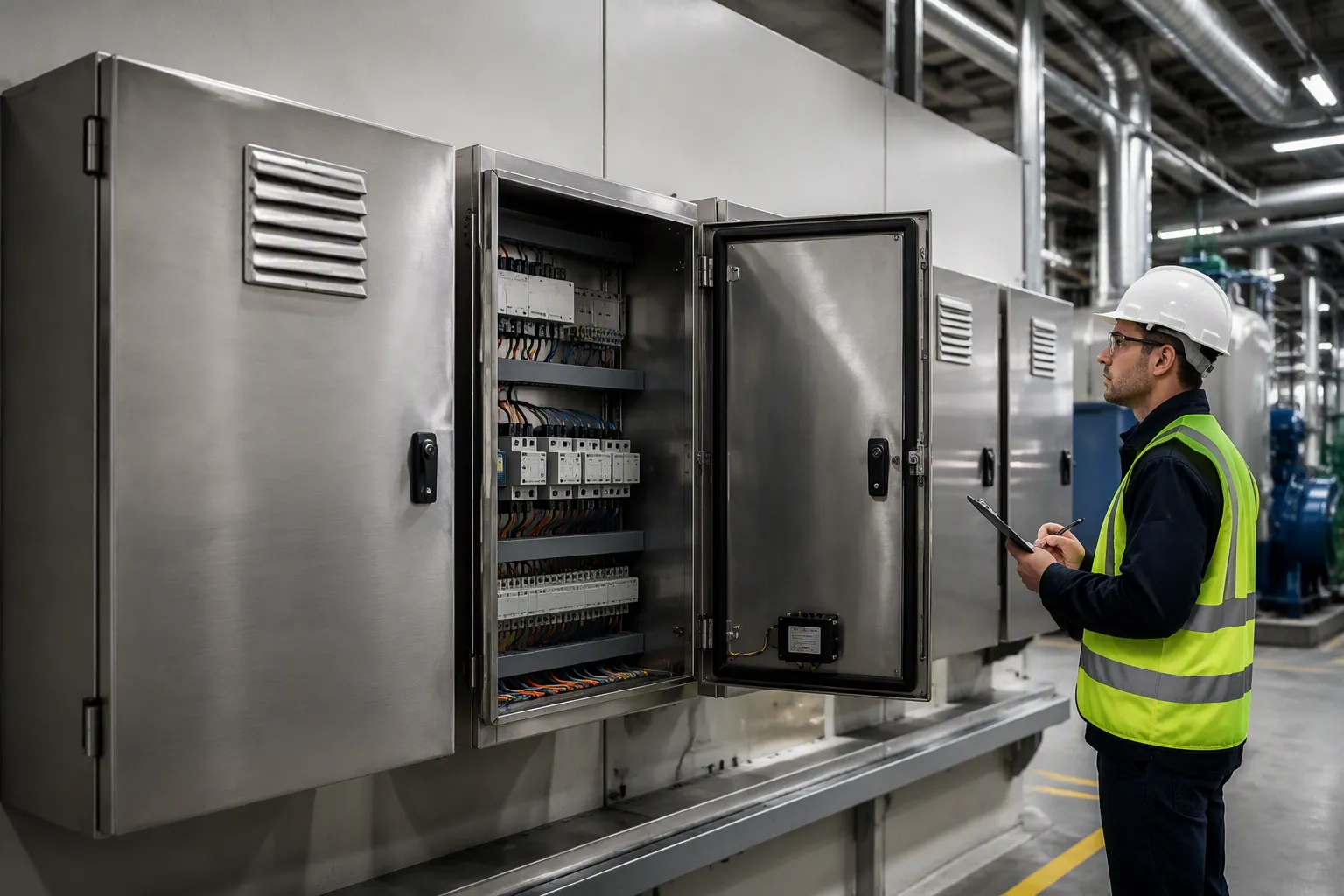
Industrial metal enclosures are precision-engineered metal housings. They protect electrical, electronic, and mechanical equipment from moisture, dust, impact, and interference. These enclosures are critical because they protect equipment, safeguard workers, extend asset life, and ensure regulatory compliance. Without them, modern industrial operations would face frequent failures, safety hazards, and costly downtime. HPS designs and manufactures industrial metal enclosures built for durability, customization, and performance in the most demanding environments.
Key Takeaways
-
Industrial metal enclosures protect sensitive electronics from interference and physical damage.
-
These enclosures keep workers safe by blocking contact with live electrical parts.
-
Strong enclosures resist harsh environments and reduce costly equipment downtime.
What Are Industrial Metal Enclosures?
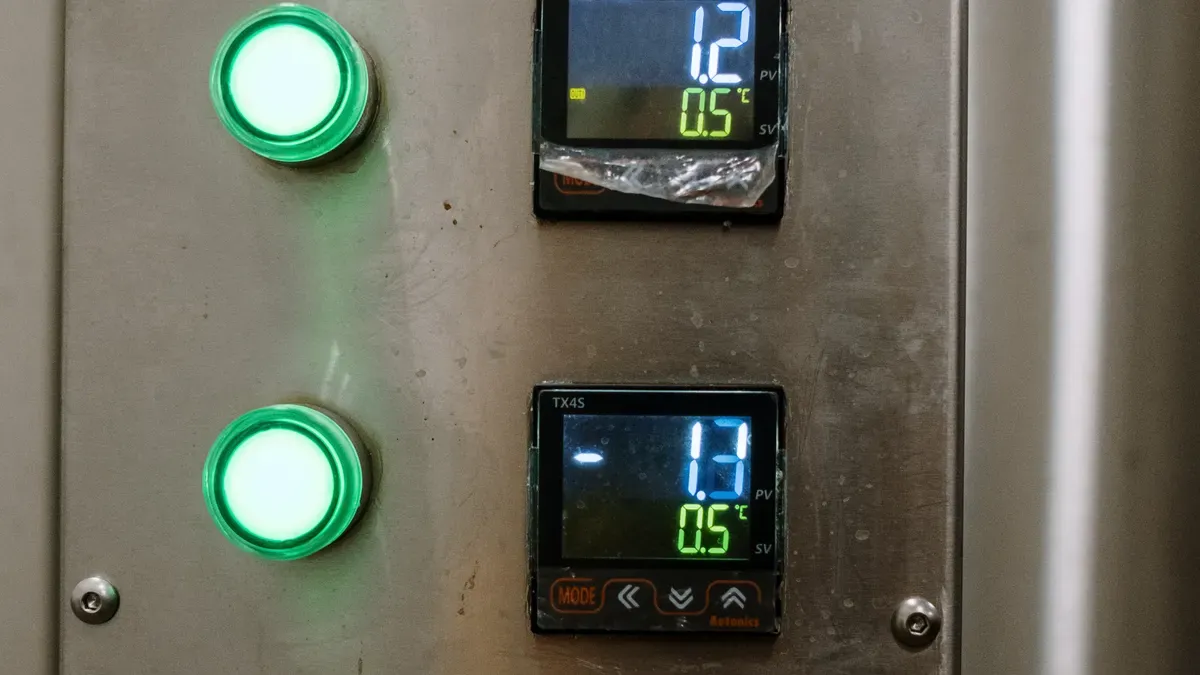
You rely on electrical and electronic systems every day in industrial settings. These systems need robust physical protection to function reliably. Industrial metal enclosures provide that protection. They serve as the physical barrier between sensitive components and the outside world.
A Simple Definition
An electrical enclosure is a cabinet or box that protects electrical or electronic equipment and prevents electrical shock. Enclosures are usually made from rigid plastics or metals such as steel, stainless steel, or aluminum. Manufacturers rate these enclosures to designate protection against hazardous, non-hazardous, and other specific environmental conditions. They may also shield equipment from electromagnetic and radio frequency interference.
Industrial metal enclosures go beyond simple housing. They deliver durability and mechanical strength. They safeguard components from impact and harsh environmental conditions. They provide electromagnetic shielding to reduce interference with sensitive equipment. They offer fire resistance to enhance the safety of electrical installations. They deliver long service life suitable for both indoor and outdoor applications.
Industry standards define these enclosures through specific performance criteria. The National Electrical Manufacturer Association (NEMA) lays out a detailed rating system for industrial enclosures based on the type of equipment, the use case, and the operational environment. NEMA has developed and maintained standard definitions for various types of electrical enclosures used in industrial applications. Each type reflects certain levels of environmental conditions and personal protection against hazards such as flying debris.
The NEMA standards are in NEMA Standards Publication 250-2008 – Enclosures for Electrical Equipment (1000 Volts Maximum). The relevant UL standards are UL 50 – Enclosures for Electrical Equipment, Non-Environmental Considerations and UL 508 – Industrial Control Equipment.
The key difference between NEMA and UL standards is in testing. UL requires independent testing by third-party evaluators. NEMA, being a manufacturer's association, allows self-compliance monitoring. Both organizations define similar enclosure types but with varying language and verification processes.
The International Electrotechnical Commission (IEC) offers an alternative approach. IEC 60529 defines enclosures by the degree of protection provided, using IP designations followed by two numerals. An IP rating is formatted as "IP" followed by two numbers. The first digit, ranging from 1 to 6, specifies protection from solids. The second digit, ranging from 1 to 8, specifies protection from water. Higher numbers indicate greater protection. IEC enclosure designations do not account for risks such as explosions, mechanical equipment damage, or environmental factors such as moisture. You cannot directly equate NEMA enclosure types to IP ratings.
Common Types of Industrial Metal Enclosures
Industrial metal enclosures come in many forms. Each type serves specific applications and environments. You select the right enclosure based on mounting style, material, and protection rating.
|
Enclosure Type |
Description / Common Use |
|---|---|
|
Wall-Mount Metal Enclosures |
Fixed directly to a wall or panel; used for electrical distribution boxes, junction boxes, and control panels in factories or buildings. |
|
Floor-Standing / Free-Standing Enclosures |
Large enclosures that stand independently; commonly used for server racks, large switchgear, and industrial automation cabinets. |
|
Rack-Mount Enclosures |
Standardized 19-inch rack metal enclosures used in data centers, networking rooms, and telecom installations. |
|
Outdoor Metal Enclosures |
Built with high IP ratings (IP65, IP66, IP67) to protect equipment from rain, UV exposure, dust, and temperature extremes. |
|
Explosion-Proof Enclosures |
Specialized enclosures for hazardous environments with flammable gases or dust; commonly used in oil, gas, and chemical industries. |
Wall-mounted enclosures are the most common choice for compact, indoor, or low-power applications where floor space is limited. Floor-mounted or freestanding cabinets are larger structures suited for heavy industrial automation and energy systems. Junction boxes are smaller enclosures designed to connect or branch electrical circuits. You use them throughout facilities wherever wiring needs to be spliced or transitioned. Pole-mounted units are common in outdoor infrastructure such as street lighting and utility hubs.
Other common types include:
-
Wall Mount Enclosures
-
Free Standing Enclosures
-
ATEX/IECEx Certified Enclosures
-
Disconnect Enclosures
-
Floor Mount Enclosures
-
Vorne Washdown Enclosures
-
Junction Box Enclosures
-
Trough Enclosures
NEMA defines industrial metal enclosures through performance criteria for different environmental conditions. The organization classifies them as NEMA Type 1 through NEMA Type 13 under NEMA Standard Publication 250. Common NEMA ratings include:
-
NEMA 1: Indoor use, protection against falling dirt and debris, primarily prevents human contact.
-
NEMA 4: Indoor/outdoor, watertight, withstands water spray.
-
NEMA 4X: Same as NEMA 4 with enhanced corrosion protection.
-
NEMA 12: Indoor, protection against falling dirt, dust, and dripping non-corrosive liquids.
HPS designs and manufactures a wide range of industrial metal enclosures to meet these diverse requirements. The company delivers custom solutions for wall-mount, floor-standing, and specialty applications.
Materials Used and Their Benefits
The material you choose for an enclosure directly affects its performance, lifespan, and suitability for specific environments. Three primary metals dominate the market: painted carbon steel, stainless steel, and aluminum.
Painted Carbon Steel offers a low-cost, robust, and flexible solution. It provides good heat distribution. You commonly use it for interior enclosures. Scratch- and chemical-resistant paint layers protect the metal surface. This material works well in controlled environments where corrosion risks remain low.
Stainless Steel comes in two main grades: 304 and 316. Grade 304 offers corrosion resistance for washdowns and hygiene-focused applications. Grade 316 provides higher tensile strength and superior resistance to halides, chlorine, brine, and high temperatures. You can use grade 316 both indoors and outdoors. High-grade stainless steel offers corrosion resistance against chemicals and weather.
Aluminum delivers excellent heat conduction. It is lightweight and corrosion resistant, especially to hydrogen sulfide. Strong alloys such as 5021 and 6061 perform well in harsh, high-heat, high-wear environments.
|
Aspect |
Details |
|---|---|
|
Metal enclosure durability |
Superior resistance to mechanical impacts, corrosion, and extreme temperatures |
|
EMI shielding |
Excellent electromagnetic interference shielding for sensitive electronics |
|
Stainless steel properties |
High-grade stainless steel offers corrosion resistance against chemicals and weather |
|
Compliance standards |
NEMA rating system, UL product safety testing, CSA certification |
|
Certification requirement |
Enclosures from UL-certified manufacturers include markings certifying UL compliance |
Protective coatings extend the life of metal enclosures significantly. HPS applies rigorous coating specifications to ensure long-term performance. The company meets these industry benchmarks:
|
Specification |
Requirement |
|---|---|
|
Powder coat thickness |
2.0–3.0 mils (50–75 microns) |
|
Pre-treatment |
Iron phosphate conversion coating at 50–150 mg/ft² |
|
Adhesion testing |
ASTM D3359 cross-hatch, verified daily |
|
Corrosion resistance |
Minimum 1,000 hours to 5% surface rust per ASTM B117 salt spray |
These specifications ensure your enclosure withstands years of exposure to moisture, chemicals, and physical stress. HPS builds every enclosure to meet or exceed these standards. The result is a product that protects your equipment and delivers reliable performance throughout its service life.
Why Are Industrial Metal Enclosures Critical for Modern Industries?

You might wonder why metal enclosures are so essential in modern industry. The answer lies in their ability to protect equipment, ensure safety, withstand harsh conditions, and meet regulatory standards. Without them, your operations would face frequent failures and high risks. Industrial Metal Enclosures provide the foundation for reliable and safe industrial systems.
Protecting Sensitive Equipment
Your electronic devices generate electromagnetic interference. This interference can disrupt nearby equipment and cause signal integrity problems. Metal enclosures act as barriers that contain this interference at its source. They also prevent external interference from entering your sensitive circuits. Here are the key properties that make metal enclosures superior to plastic alternatives:
-
Structural rigidity that supports mounting heavy components and resisting mechanical stress
-
Superior EMI/RFI shielding when properly designed and grounded
-
Thermal conductivity that aids passive heat dissipation
-
Broad compatibility with protective finishes such as powder coating
-
Dimensional precision for tight-tolerance component fits
-
Long service life across a wide range of operating environments
Different metals offer varying shielding performance. The table below shows common metals and their applications:
|
Metal |
Key Shielding Properties |
Typical Application |
|---|---|---|
|
Copper |
High conductivity, corrosion resistance, easy fabrication |
Magnetic shielding |
|
Aluminum |
Lightweight, cost-effective, requires protective coating |
General EMI shielding |
|
Nickel |
Enhanced corrosion resistance, used in coatings/alloys |
Shielding performance enhancement |
|
Stainless Steel |
Strong, durable, corrosion-resistant |
Demanding environments |
|
Brass |
Moderate conductivity, easy to form and solder |
General-purpose shielding |
|
Nickel Silver |
Excellent shielding, non-magnetic |
Sensitive electronic enclosures |
|
Steel (ferromagnetic) |
Bulk material effect for frequencies ≤15 MHz |
Low-frequency attenuation |
|
Permalloy 80 / MuMetal |
High permeability, low core losses |
Greater attenuation at low frequencies |
EMI shielding works in two directions. Your system must limit its own emissions so it does not disrupt other equipment. At the same time, your system must be protected from external interference. Metal enclosures primarily protect against EMI by reflecting energy. This reflection is advantageous against external sources. However, internally generated EMI can be reflected back into the electronics. In industrial environments, metal enclosures function as physical barriers that contain electrical noise at its source. They protect critical components such as PLCs and industrial PCs. They also preserve signal integrity for sensors, encoders, and industrial Ethernet networks. The shielding effectiveness relies on proper grounding, filtered cable entries, and the conductive properties of the metal enclosure working together to create stable and predictable operating conditions.
Common shielding methods include metal cans, aluminized Mylar, screen-printed conductive ink, vacuum deposition, and ITO films. Each method serves specific applications. For example, metal cans are formed aluminum covers placed over circuit board chips. Extensions connect them to the ground plane to absorb interference.
Ensuring Worker Safety
Protecting workers is a top priority in any facility. Metal enclosures prevent accidental contact with live electrical parts. They provide a physical barrier that reduces shock hazard. OSHA regulations explicitly require metal-enclosed equipment in certain situations. The table below summarizes key requirements:
|
Regulation Clause |
Requirement |
|---|---|
|
1910.303(h)(2)(iii)(A) |
Indoor installations accessible to other than qualified persons must use metal-enclosed equipment, or be enclosed in a vault or in a locked, access-controlled area. |
|
1910.303(h)(2)(v)(C) |
Nonmetallic or metal-enclosed equipment located outdoors and accessible to the general public must be designed so exposed nuts or bolts cannot be readily removed to access live parts. |
|
1910.303(h)(2)(v)(D) |
Where nonmetallic or metal-enclosed equipment is accessible to the general public and the enclosure bottom is less than 2.44 m (8.0 ft) above floor or grade, the enclosure door or hinged cover must be kept locked. |
You must follow these regulations to protect your employees and avoid fines. Metal enclosures provide the physical barrier needed to meet these safety requirements. They also contain arc flash events, reducing the risk of burns and injury.
Withstanding Harsh Environments
Industrial environments can be brutal. Washdown procedures, corrosive chemicals, and extreme temperatures threaten your equipment. You need enclosures that withstand these conditions. Consider a real-world case where IP65 enclosures failed during high-pressure washdown. They only protect against low-pressure water jets at 12.5 liters per minute. Water penetration resulted in two days of lost production. The facility should have specified NEMA 4X or IP66. In another case, outdoor installations in northern Canada used IP67 enclosures. Ice formed on the latches during winter, making them impossible to operate. IP standards do not test ice formation functionality. The project should have specified NEMA 4X or NEMA 3R, both of which include ice formation testing.
The table below shows common NEMA ratings and their protection capabilities:
|
NEMA Rating |
Protection Capabilities |
Typical Applications |
|---|---|---|
|
NEMA 3R |
Rain, sleet, snow, external ice formation |
Outdoor utility, metering, construction |
|
NEMA 4 |
Windblown dust, rain, splashing water, hose-directed water |
Washdown areas, outdoor industrial sites |
|
NEMA 4X |
All NEMA 4 protections + corrosion resistance |
Chemical plants, marine, food processing |
|
NEMA 6P |
Hose-directed water + prolonged submersion |
Flood-prone areas, wastewater treatment |
Note that NEMA 4X roughly corresponds to IP66 for sealing against dust and strong water jets. However, NEMA 4X also guarantees corrosion resistance, which IP66 alone does not address. In coastal facilities or chemical plants, IP66 may handle water but could fail quickly due to corrosion. You must choose the right rating for your environment.
Meeting Industry Standards and Compliance
Compliance with industry standards is not optional. You must select industrial metal enclosures that meet NEMA, UL, or IEC requirements depending on your application. Each standards body defines specific protection levels. The table below summarizes the main standards:
|
Standards Body |
Specific Standard(s) |
Scope / Notes |
|---|---|---|
|
NEMA |
NEMA 250 |
Defines enclosure types (for example, Type 1, 2, 3, 3-R, 3-X, 4, 4-X, 12, 13) covering construction, corrosion resistance, and environmental protection. |
|
IEC |
IEC 60529 |
Defines ingress protection (IP) ratings for enclosures. |
|
UL |
No specific UL standard number provided |
UL standards are based on NEMA specifications and enforce compliance through third-party testing and on-site visits. |
Key differences between NEMA and IEC standards include:
-
NEMA standards address enclosure construction and minimum design requirements.
-
IEC standards identify ingress protection levels (IP ratings).
-
NEMA incorporates corrosion protection levels, unlike IEC classifications.
-
NEMA ratings and IP ratings do not directly correspond and must be evaluated independently.
UL requires independent third-party testing. NEMA allows self-compliance monitoring. Both organizations define similar enclosure types but with varying verification processes. Choosing the right compliance ensures your equipment operates safely and reliably. HPS manufactures enclosures that meet these rigorous standards, ensuring compliance and reliable performance in your operations.
How Industrial Metal Enclosures Support Operational Efficiency
Industrial Metal Enclosures do more than protect equipment. They directly improve your operational efficiency by reducing downtime and enabling advanced automation systems.
Reducing Downtime and Maintenance Costs
Unplanned downtime drains your productivity and profits. Proper enclosure design plays a major role in preventing equipment failures. Consider these real-world results:
|
Case Study |
Industry / Setting |
Enclosure Protection Benefit |
Maintenance / Downtime Outcome |
|---|---|---|---|
|
Case Study 1 |
Offshore platforms exposed to saltwater and high humidity |
Stainless steel enclosures resisted rapid corrosion and protected electrical systems/instruments |
Withstood corrosion for several years without any maintenance and reduced costly downtimes |
|
Case Study 2 |
Food processing plants with strict sanitation and harsh cleaning chemicals |
Stainless steel enclosures protected equipment from corrosive cleaning agents while meeting hygiene requirements |
Decreased equipment downtime and enabled a continuous production schedule |
|
Case Study 3 |
Chemical refineries with high temperatures and acidic materials |
Stainless steel enclosures protected sensitive equipment under severe conditions |
Reduced maintenance requirements considerably and increased equipment lifespan |
Many facilities experience unplanned downtime caused by electronic equipment failure.
FACT: 80% of plant equipment failures are caused by failing cooling solutions.
A well-designed sealed enclosure using high-quality construction and materials virtually eliminates contamination risk and the need for frequent maintenance. You reduce costly unscheduled maintenance when you invest in proper enclosure protection.
Supporting Automation and Smart Systems
Modern automation systems demand enclosures with specialized features. Your programmable logic controllers, variable speed drives, and servos are highly sensitive to heat and contamination. Smaller electrical cabinet sizes make temperature control difficult, causing components to fail prematurely.
|
Special Feature |
Design Requirements for Automation Enclosures |
|---|---|
|
Thermal Management |
Passive cooling via properly sized ventilation openings; heat sink integration using aluminum panels; active cooling with precision fan cutouts |
|
EMI/RFI Shielding |
Conductive enclosure materials; continuous electrical bonding at seams; conductive gaskets at removable panels |
|
Environmental Protection |
NEMA 12 and IP54 ratings for dust and incidental moisture protection in climate-controlled manufacturing facilities |
|
Material Selection |
Aluminum for superior thermal dissipation; steel for better low-frequency magnetic shielding; stainless steel for corrosion resistance |
HPS engineers enclosures that meet these demanding automation requirements. The result is reliable performance for your smart systems.
Industrial metal enclosures are essential infrastructure, not simple boxes. They protect your equipment, people, and productivity at once. As industries embrace 5G and edge computing, demand will grow at 5.7% annually. HPS delivers reliable, high-quality industrial metal enclosures for your evolving needs.
FAQ
What makes industrial metal enclosures different from plastic enclosures?
Industrial metal enclosures offer superior strength, heat dissipation, and EMI shielding. They withstand harsh conditions better than plastic. You get longer service life and better equipment protection.
How do you choose the right enclosure for your facility?
You assess your environment, equipment needs, and compliance requirements. Check NEMA or IP ratings for moisture, dust, and corrosion protection. Match the material to your specific conditions.
Why does enclosure material matter for your operations?
The material determines corrosion resistance, thermal performance, and durability. Stainless steel works for washdowns and chemicals. Aluminum suits heat-heavy applications. Painted carbon steel fits controlled indoor environments.