Choosing the right solar battery storage system starts with understanding how much electricity you need, when you need it, and how long the battery must support your loads. A properly sized system can store excess solar energy for evening use, provide backup power during outages, and help businesses manage electricity costs. An undersized battery may run out of energy too early, while an oversized system can increase upfront costs without delivering enough additional value.
For homeowners, solar installers, commercial property owners, and energy project developers, battery sizing involves more than selecting a capacity in kilowatt-hours (kWh). You also need to consider inverter power in kilowatts (kW), usable battery capacity, depth of discharge, system efficiency, solar production, and the site's actual load profile.
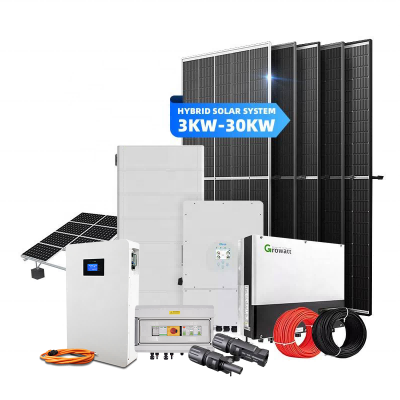
PNG Solar supplies residential lithium battery products, hybrid solar systems, and commercial and industrial energy storage solutions. This guide explains how to size a solar battery storage system using practical calculations, residential examples, and commercial project considerations.
What Is Solar Battery Storage System Sizing?
Solar battery storage system sizing is the process of determining the battery capacity, inverter power, and charging capability required to meet a property's energy needs. The objective is to store enough electricity for the intended application without investing in unnecessary capacity.
For a home, the main goal might be to power essential appliances overnight or maintain selected loads during a power outage. For a business, the objective may be to store daytime solar generation, reduce peak electricity demand, shift energy consumption to lower-cost periods, or provide backup power for critical equipment.
The correct configuration depends on the project's operating requirements. A grid-connected home that uses most of its electricity during the evening may need a different battery size from an off-grid property that must operate through several cloudy days. Likewise, a factory with short demand peaks has different requirements from a commercial building that needs several hours of backup power.
PNG Solar offers solar battery storage products for different system configurations. Before comparing models, establish the required energy capacity, power output, operating schedule, and backup duration.
Understanding Battery Capacity and Power
Two specifications are essential when sizing a solar battery: energy capacity, measured in kilowatt-hours, and power rating, measured in kilowatts. They describe different aspects of battery performance and should not be treated as interchangeable.
Battery capacity (kWh) indicates how much energy a battery can store. A larger capacity generally allows the system to supply electricity for a longer period, assuming the load remains unchanged.
Power rating (kW) indicates how much power the system can deliver or absorb at a given moment. The inverter and battery must both support the required operating power.
For example, a battery system with 10 kWh of usable energy could theoretically supply a continuous 2 kW load for five hours. In practice, the available duration will be shorter if conversion losses, standby consumption, temperature effects, or operating reserves are included.
Quick reference
Energy requirement = Load power × Operating time
Battery capacity is measured in kWh.
Inverter power is measured in kW.
A battery with sufficient kWh may still be unsuitable if its maximum discharge power is too low for the connected equipment. Conversely, a high-power inverter cannot compensate for insufficient stored energy during a long outage.
How to Calculate the Required Battery Capacity
A practical first step is to estimate how much electricity the battery must deliver during the intended discharge period. This may be the energy used overnight, the consumption of critical loads during an outage, or the energy required during a business's peak tariff period.
For a preliminary calculation, use the following formula:
Required nominal battery capacity
Required load energy (kWh) ÷ (Usable depth of discharge × Discharge-path efficiency)
Suppose a home needs 8 kWh of electricity from its battery overnight. The selected battery allows a depth of discharge of 90%, and the estimated efficiency of the discharge path is 95%.
Required nominal capacity = 8 ÷ (0.90 × 0.95) = approximately 9.36 kWh.
In this example, a battery with approximately 9.36 kWh of nominal capacity is the mathematical starting point. The final selection should also consider battery aging, reserve requirements, seasonal temperature, actual load variation, and the manufacturer's usable-capacity specifications. A modest additional margin may be appropriate, depending on the project.
This calculation estimates energy capacity only. The inverter's continuous output, surge capability, battery discharge current, and the ability to recharge the battery must be checked separately.
How to Size a Solar Battery for a Home
Residential solar battery sizing should start with actual household electricity consumption rather than a standard battery size. Two homes with similar monthly electricity bills can have different storage needs because their appliances, solar production, and consumption schedules may differ.
Review utility bills, smart meter data, and the solar system's monitoring records. Identify how much electricity the household uses after sunset and which appliances must remain operational during an outage.
A typical residential assessment should consider:
- Average daily electricity consumption and nighttime demand.
- Essential loads such as refrigeration, lighting, internet equipment, and selected outlets.
- High-power appliances, including air conditioning, water heaters, pumps, and electric cooking equipment.
- The number of hours of backup required.
- Solar generation by season and the amount of surplus electricity available to recharge the battery.
- The inverter's rated output, starting-current capability, and battery compatibility.
Consider a household that uses 12 kWh of electricity overnight and wants the battery to cover that entire amount. If the battery has a 90% usable discharge fraction and the discharge-path efficiency is estimated at 95%, the preliminary nominal capacity requirement is:
12 ÷ (0.90 × 0.95) = approximately 14.04 kWh.
The final design may need a different capacity if the homeowner intends to retain an emergency reserve, expects battery degradation over time, or cannot consistently recharge the battery from solar generation. If the objective is to power only essential loads, the required battery may be considerably smaller.
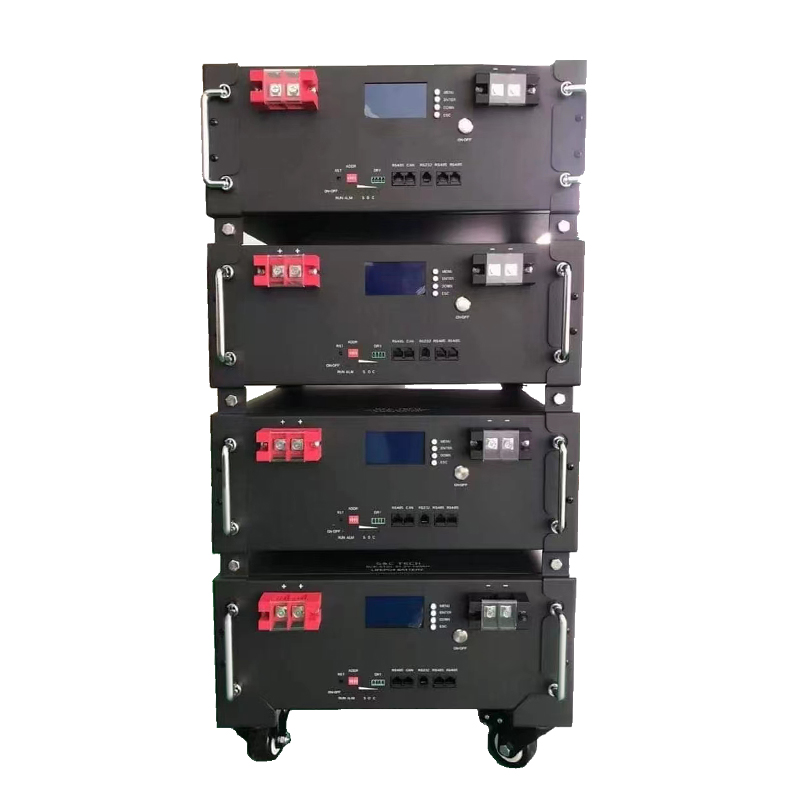
PNG Solar's residential energy storage systems include battery configurations intended for home solar and backup applications. Select a product based on usable capacity, inverter compatibility, installation requirements, and the expected load profile rather than nominal capacity alone.
Choosing Battery Capacity for Essential Loads and Whole-Home Backup
A whole-home backup system and an essential-load backup system can require very different battery capacities. Before selecting a battery, decide whether the goal is to maintain only critical equipment or to supply most of the property's normal electricity demand.
An essential-load system may support a refrigerator, lighting, communication equipment, and selected outlets. A whole-home system may also need to operate air conditioning, electric cooking equipment, pumps, and other high-demand appliances. These loads can substantially increase both the required battery capacity and inverter power.
For backup sizing, list each appliance's running power, expected operating hours, and starting-current requirements where relevant. Multiply power by operating time to estimate energy use, then total the energy requirements of all loads expected to operate simultaneously or sequentially.
Do not assume that a battery's nominal capacity equals the energy available to household appliances. Usable capacity, conversion losses, minimum state-of-charge settings, and backup reserve policies all affect the energy that can actually be delivered.
If the property requires reliable operation through prolonged outages, the design should also evaluate whether the solar array can recharge the battery during cloudy weather and whether a generator or another backup source is needed.
How to Size a Commercial Solar Battery Storage System
Commercial and industrial battery storage sizing requires a more detailed assessment of energy demand, load peaks, operating schedules, electricity tariffs, and the financial objective of the project. A factory, warehouse, office building, and retail facility may use electricity in very different patterns even when their total daily consumption is similar.
For commercial projects, analyze interval meter data whenever possible. Fifteen-minute or finer measurements can reveal demand peaks, periods of high consumption, and opportunities to store surplus solar electricity. Longer historical records are useful for understanding seasonal variation and changes in production or occupancy.
The sizing approach depends on the main objective:
- Solar self-consumption: Size storage around surplus solar generation and the electricity demand that occurs later in the day.
- Peak shaving: Analyze the magnitude and duration of demand peaks, the site's baseline load, and the applicable demand-charge rules.
- Backup power: Identify critical equipment, required backup duration, acceptable interruption time, and restart or surge loads.
- Time-of-use energy shifting: Compare charging and discharging windows, tariff differences, round-trip efficiency, and battery cycling costs.
- Renewable integration: Assess the timing of solar generation, grid export limitations, and the facility's energy consumption profile.
For peak shaving, a battery's energy capacity must cover the intended reduction in demand for the required duration. Its power rating must also be sufficient to provide the required reduction at the relevant time. A short, high demand spike may require high power but relatively little energy, whereas several hours of load shifting can require substantial storage capacity.
PNG Solar offers commercial energy storage system solutions for projects that need to evaluate battery capacity, power conversion, cooling, protection, and system integration as a complete package.
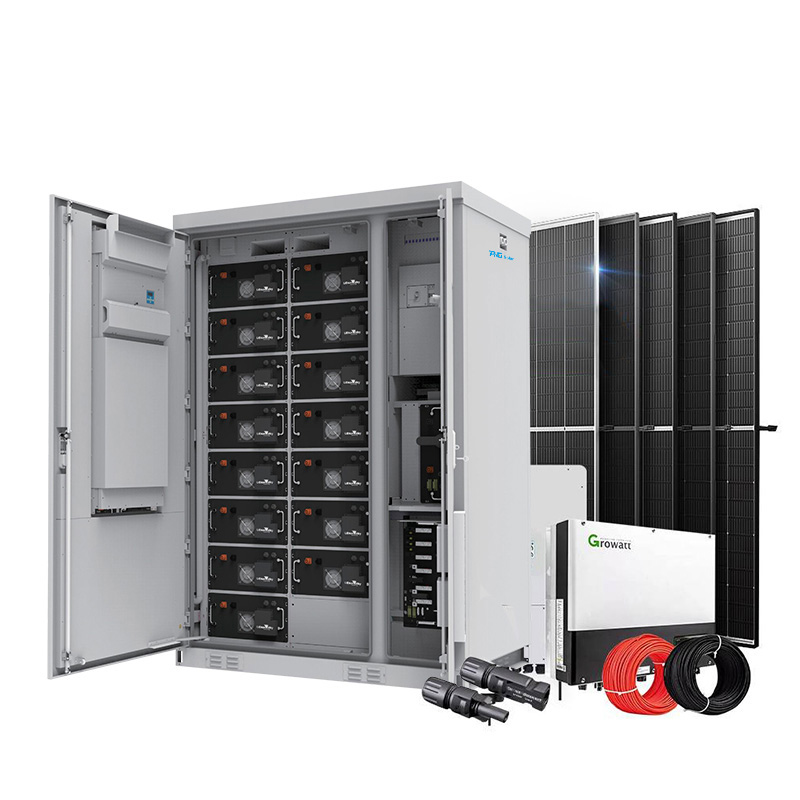
For example, PNG Solar publishes a 100 kW / 215 kWh commercial and industrial energy storage configuration. The 100 kW figure describes rated AC output power, while 215 kWh describes nominal battery energy capacity. These figures serve different purposes and should be evaluated separately against the site's load and duration requirements.
The PNG Solar commercial and industrial hybrid solar system range provides another reference point for project developers evaluating larger solar and storage installations. Final system sizing should be based on actual electrical data and the technical specifications of the selected configuration.
How to Calculate Inverter Power Requirements
Battery capacity determines how much energy can be stored, but inverter power determines how much AC power can be supplied to the loads at a given moment. A properly sized battery system must meet both requirements.
Start by identifying the equipment expected to operate simultaneously. Add their running power requirements and assess whether any equipment has a high starting current, such as motors, compressors, or pumps.
For example, if the expected simultaneous running load is 4 kW, the inverter must be capable of supporting at least that load under the actual operating conditions. Additional capacity may be needed for startup surges, future load changes, or manufacturer derating at high temperatures.
The battery must also be able to supply the required DC power. For a simplified estimate, a 4 kW AC load operating at an assumed inverter efficiency of 95% requires approximately 4.21 kW from the DC side:
4 kW ÷ 0.95 = approximately 4.21 kW.
This is an illustrative calculation. Actual input power varies with inverter efficiency, power factor, operating voltage, and load conditions. Verify the battery's continuous discharge rating, permitted current, and inverter power limits before finalizing the design.
For solar-plus-storage installations, PNG Solar's hybrid solar system solutions can be considered when evaluating the relationship between solar generation, battery charging, inverter output, and grid interaction.
How Solar Panel Output Affects Battery Sizing
The solar array and battery must be sized as a coordinated system. A large battery may provide substantial storage capacity, but it will not deliver the expected daily benefit if the solar array cannot generate enough surplus electricity to recharge it.
Estimate daily solar production using the array's rated capacity, expected peak sun hours, and a realistic performance factor that accounts for system losses. The result is an estimate, not a guarantee, because weather, shading, orientation, temperature, and seasonal variation affect generation.
Illustrative solar production estimate
Solar array capacity: 8 kW
Average equivalent peak sun hours: 4 hours per day
Assumed performance factor: 0.80
Estimated daily generation = 8 × 4 × 0.80 = 25.6 kWh
This is an example only. Actual generation must be estimated using the project's location, season, system design, and weather data.
Not all generated electricity is available for battery charging. Some energy may be consumed directly by the property, exported to the grid, or lost during conversion. The amount available to charge the battery therefore depends on the timing of solar generation and electricity consumption.
When planning a new installation, evaluate the solar hybrid system configuration alongside battery capacity and inverter specifications. This helps ensure that the PV array can meet daytime loads and replenish the battery within the intended charging window.
Choosing the Right Battery Chemistry and Configuration
Battery chemistry, usable capacity, cycle life, and operating limits all affect the final storage design. Lithium iron phosphate (LiFePO4) batteries are widely used in stationary solar storage because of their thermal stability and cycle-life characteristics, although the performance of individual products depends on cell quality, system engineering, and operating conditions.
When comparing products, review the nominal and usable energy capacities, permitted depth of discharge, continuous charge and discharge current, cycle-life test conditions, warranty terms, and compatibility with the intended inverter.
PNG Solar publishes low-voltage rack-mounted battery models in 51.2 V configurations with nominal capacities of 5.12 kWh, 10.24 kWh, 15.36 kWh, and 20.48 kWh. The product page also lists a parallel connection capability of up to 15 units for the specified product range. Actual installation limits depend on the model, inverter, communications configuration, and manufacturer's instructions.
Review the PNG Solar 51.2 V rack-mounted LiFePO4 battery range to compare nominal capacity options and published specifications.
For residential installations, a modular system can make it easier to match storage capacity to present needs and potential future expansion. For commercial projects, the design may also require dedicated battery management, thermal management, fire protection, communications, and energy management functions.
Common Solar Battery Sizing Mistakes to Avoid
Several common mistakes can lead to poor system performance or unnecessary costs. Addressing them early helps buyers compare quotations on a consistent technical basis.
- Using monthly electricity consumption alone: Monthly totals do not reveal when energy is used or how much power is required at peak times.
- Confusing kW with kWh: Power rating and energy capacity serve different purposes and must be evaluated independently.
- Ignoring usable capacity: Nominal battery capacity does not necessarily equal the energy available to the loads.
- Overlooking inverter surge requirements: Motors and compressors may require significantly more power during startup than during normal operation.
- Assuming the battery will always recharge fully: Cloudy weather, seasonal solar variation, and daytime consumption can limit charging opportunities.
- Ignoring battery degradation: The design should consider expected aging, warranty conditions, and the required performance over the system's service life.
- Choosing capacity without an economic analysis: Additional storage does not always generate enough savings to justify its cost.
- Failing to verify compatibility: Battery voltage, BMS communication, inverter settings, protection devices, and local electrical requirements must be checked.
For larger commercial systems, also review thermal management, fire safety, site access, commissioning, maintenance requirements, and the applicable grid connection standards before approving a final design.
How to Evaluate the Cost and Return on Investment
The financial value of solar battery storage depends on how much useful energy the battery delivers and what that energy is worth at the time of use. A battery that is frequently charged and discharged may provide more value than a larger system that remains underused.
For homes, the economic case may depend on retail electricity prices, time-of-use tariffs, compensation for exported solar electricity, backup power needs, and available incentives. For businesses, demand charges, operating schedules, peak-shaving opportunities, and production requirements may also influence the result.
A practical evaluation should include the installed cost, usable capacity, round-trip efficiency, expected annual energy throughput, maintenance, warranty coverage, potential replacement costs, and any applicable financing or incentive assumptions.
For example, shifting 5 kWh of electricity each day does not necessarily create savings equal to 5 kWh multiplied by the retail electricity price. The calculation must account for charging source, charging and discharging losses, the cost of electricity used to charge the battery, and any revenue that would otherwise have been earned by exporting solar electricity.
For commercial and industrial projects, the financial model should be based on the site's actual interval load data and tariff structure. Compare alternative battery sizes rather than assuming that the largest available system will provide the highest return.
Why Work With PNG Solar on a Storage Project?
PNG Solar supplies photovoltaic modules, lithium batteries, inverters, and solar energy systems for residential, commercial, and industrial applications. Its product range includes residential battery configurations, hybrid solar systems, and larger integrated storage solutions.
For project buyers, the key is to match the product configuration to the site's actual requirements. Before requesting a quotation, prepare the target battery capacity, required power output, backup duration, solar array size, installation environment, destination market, and preferred operating mode.
PNG Solar's solar power and energy storage solutions provide a starting point for comparing equipment options. Confirm the latest product datasheets, compatibility, warranty terms, certifications, and delivery requirements for the exact models being considered.
A well-sized solar battery storage system should deliver the required energy, provide adequate power, recharge within the available solar window, and meet the project's financial and operational objectives. Accurate load data and realistic assumptions are the foundation of a reliable design.
FAQ About Solar Battery Sizing
How do I calculate the battery capacity needed for a solar system?
Estimate the energy the battery must deliver in kWh, then divide that value by the usable depth of discharge and the estimated discharge-path efficiency. Include an appropriate allowance for reserve capacity, aging, and actual operating conditions. Check inverter power separately.
What is the difference between kW and kWh in battery storage?
Kilowatts (kW) measure power, or how much electricity a system can deliver at a given moment. Kilowatt-hours (kWh) measure energy capacity, or how much electricity is stored or used over time.
How much battery storage does a typical home need?
The required capacity depends on nighttime electricity use, critical loads, backup duration, solar generation, and the system's usable capacity. Review actual consumption data and size the battery according to the household's intended operating requirements rather than relying on a universal size.
How do businesses size a commercial solar battery system?
Businesses should analyze interval electricity data, demand peaks, operating schedules, tariff structures, backup requirements, and available solar generation. Battery power should match the required kW, while usable capacity should cover the intended energy requirement in kWh.
How long can a solar battery power a home?
A preliminary estimate is usable battery energy divided by average load power. For example, 10 kWh of usable energy could theoretically support a 2 kW load for five hours. Actual runtime depends on conversion losses, changing loads, operating reserves, and equipment limits.
Is a larger solar battery always better?
No. A larger battery costs more and may remain underused if the site does not have enough surplus solar energy or electricity demand to use the extra capacity. The best size balances usable energy, required power, charging opportunities, backup needs, and lifetime economics.
Can I expand my solar battery storage system later?
Some modular systems support additional battery units, but expansion depends on the specific battery model, inverter, BMS communication, system voltage, and manufacturer's installation limits. Confirm expansion compatibility before purchasing the initial system.
Does PNG Solar offer residential and commercial battery storage solutions?
Yes. PNG Solar publishes residential lithium battery products, hybrid solar systems, and commercial and industrial energy storage solutions. Buyers should compare the latest specifications and confirm the configuration required for their project.